How to Stop Living Paycheck to Paycheck: A 30-Day Plan
How to stop living paycheck to paycheck: map paydays, assign bills to each check, and build a first-month cash buffer with a realistic cash-flow plan.
By Ultimate Budget Planner by Cosmo Suite · Editorial policy
Published · 9 min read
General information, not financial advice.
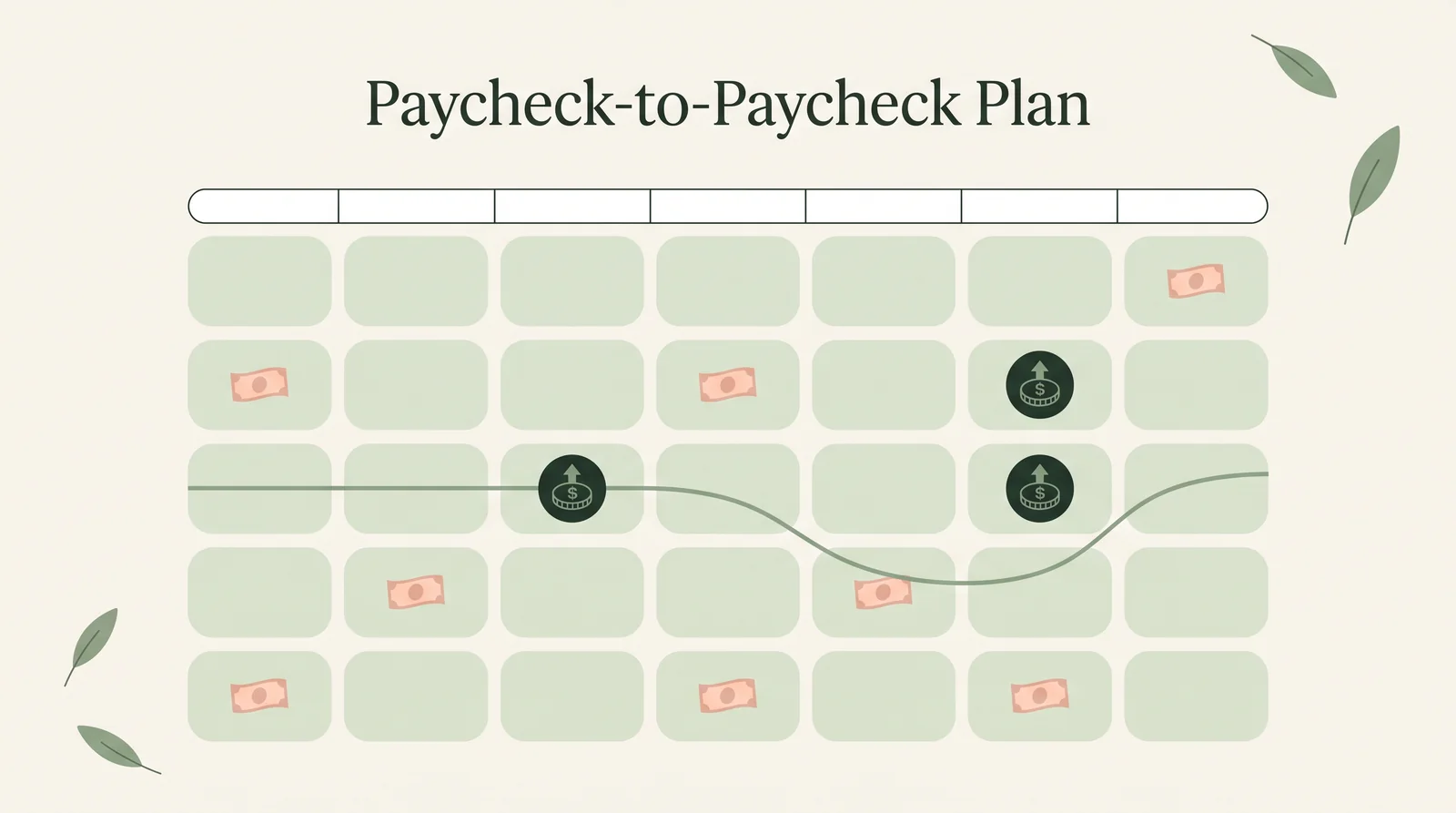
The account can look fine on payday and feel empty a week later. A monthly budget may add up, yet rent, utilities, and groceries can be due before the next check arrives. If that is your month, start by mapping the next 30 days in the order money comes in and goes out.
This 30-day plan maps bills, pay dates, and the tight weeks so you can see whether timing or a monthly shortfall is driving the pressure. The first goal is to see which bills claim each check, where the tight weeks fall, and whether the pressure comes from timing, a gap between income and expenses, or both. A budget spreadsheet for monthly and paycheck planning can keep that picture in one place.
Key Takeaways
- Use the balance in your account and the next confirmed pay date, not money you expect later.
- Put bill amounts and due dates beside the checks that arrive before them.
- Set a weekly amount for essentials that change, then compare it with what you spend.
- If monthly expenses exceed monthly income, a calendar can reveal the gap but cannot make it disappear.
Why a Monthly Budget Can Still Leave You Short
A monthly budget tracks totals; a cash-flow plan tracks when those dollars arrive and when they leave. The Consumer Financial Protection Bureau defines cash flow in terms of the timing of income and expenses and notes that a mismatch can leave someone short at the end of a week or month. It suggests tracking that timing and, where possible, asking creditors about bill due dates.
The Federal Reserve's 2025 Survey of Household Economics and Decisionmaking found that 16% of adults did not pay all of their bills in full in the month before the survey. That is a specific bill-payment measure, not a count of people who say they live paycheck to paycheck. It does show why a budget needs to account for bills that are due now, not only a monthly total.
Navy Federal Credit Union's budgeting example makes the timing issue easy to see. Its hypothetical household brings in $1,000 every other week and has $1,800 in monthly expenses. The monthly total is enough on paper, but $1,200 is due before the second check, so the account can run short first. Those example amounts are not estimates for a typical household.
The calendar can show what to change first. A bill due before income arrives may be a timing problem. If the month has more required expenses than take-home income, that is a larger shortfall. The plan helps you see the difference without treating every problem as a spending mistake.
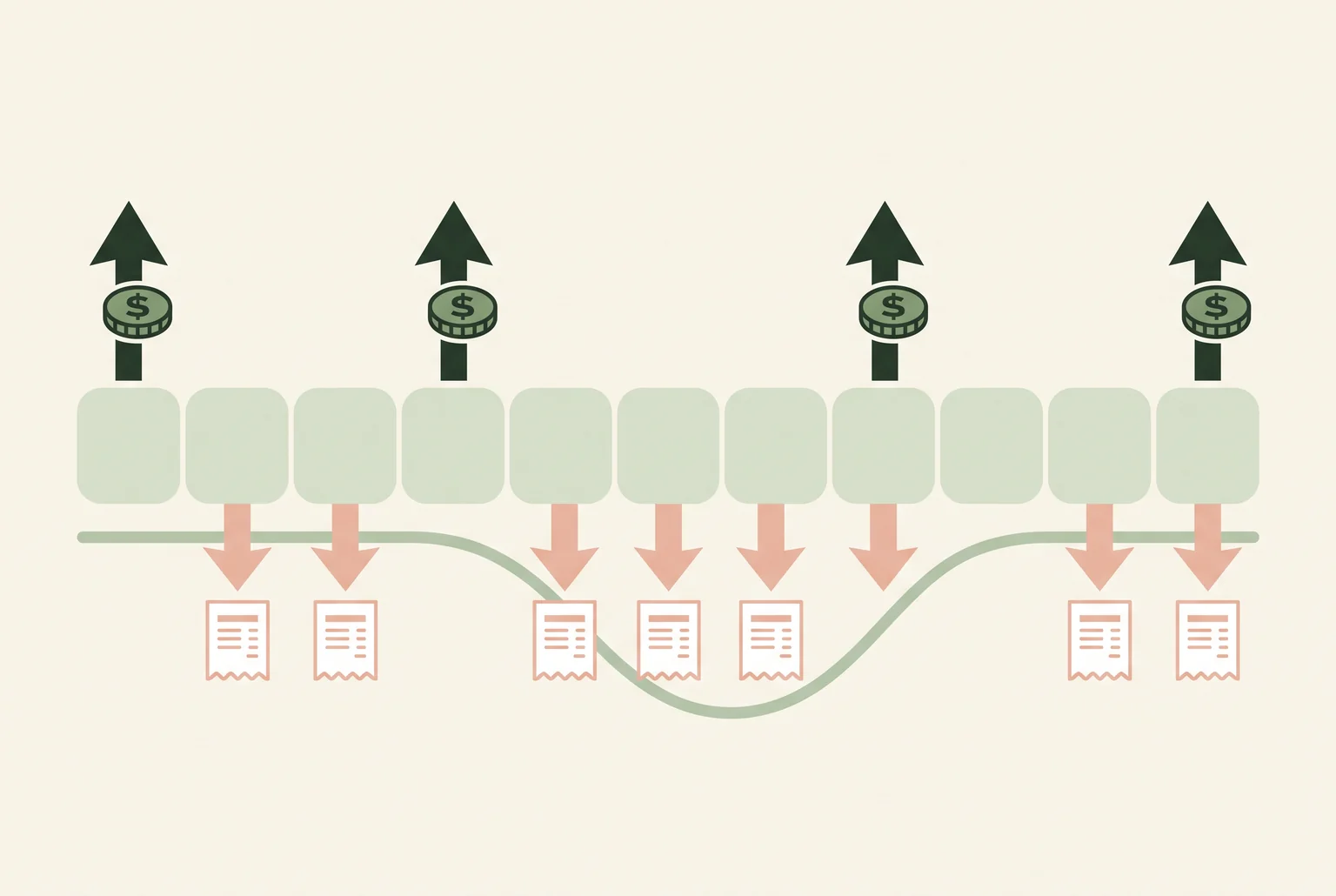
Cash flow is the timing of money coming in and going out. A useful check is to compare two numbers for each pay period: the balance left after scheduled bills, and the amount still needed for essentials before the next deposit. If the second number is larger, the gap is visible before the week begins. This two-number check turns a monthly total into a short-range decision: identify the low point, then ask which date or amount can realistically change.
A 30-Day Paycheck Plan: The Decision Table
Use the next 30 days as a working window. Add the dates you know, then update the plan as checks post and bills clear.
| Step | What to write down | What it helps you see |
|---|---|---|
| 1. Check today's cash | Posted balance and any money already reserved | What is available now |
| 2. Mark pay dates | Expected date and take-home amount for each check | When money can be used |
| 3. Add bills | Amount, due date, and whether the payment is already scheduled | Which check must cover each bill |
| 4. Reserve essentials | Food, transport, medicine, and other needs until the next check | What remains for the week |
| 5. Track actuals | What cleared and what you spent | Where the estimate differed |
| 6. Review at day 30 | Bills due next and any balance carried forward | What to change for the next cycle |
This is a short cash calendar, not a detailed record of every category in your life. The CFPB bill calendar recommends listing each bill, amount, and due date, then checking the calendar weekly. Use the simplest format you will update: paper, a spreadsheet, or a calendar app.
Step 1: List the Money That Is Actually Available
Start with what has posted in your account today. Then write the next confirmed pay date and the take-home amount you expect. Keep an expected check separate from the balance you can use now. A payroll delay or a bill that clears early can change the order of the week.
If you have money set aside for rent, insurance, or another known bill, write it beside that bill. Do not count the same balance as both available spending money and money already committed. The point is to see the amount that is still free after the promises already made.
The plan below uses the approved illustrative amount of $1,950 in take-home pay every other week. Two checks total $3,900 in a two-paycheck month. The $3,900 is cash received in that example month; it is not an annual average and it does not guarantee that the first check can cover every bill.
Step 2: Match Bills to the Check Before Their Due Date
Write each bill's name, amount, and due date. Place it beside the paycheck that arrives early enough to cover it. If the date is tight, contact the biller to ask whether it can move the due date or offer another arrangement. CFPB guidance notes that asking to adjust due dates may help some people match payments with income flow. Wait for confirmation before planning around a new date.
The Navy Federal cash-flow example also lays out bills and paydays in date order. The running balance shows the low point before the next check. That low point matters more than the monthly total when you need to know whether you can pay a bill on time.
If you use automatic payments, check when each one processes. A bill with a due date on Friday may leave earlier depending on the company and your bank. Use the statement or the biller's information for the actual payment date. Do not rely on a calendar reminder as proof that a payment is scheduled.
Step 3: Set a Weekly Amount for Variable Costs
After bills due before the next check are covered, decide what the remaining cash needs to do. Groceries, fuel, transit, and other routine costs often happen in small purchases. A weekly amount gives you a near-term boundary to compare with real spending.
Use recent receipts or account activity to estimate those costs. Do not pick a low number just because the account feels tight; a plan that leaves out food or transport will fail as soon as you use them. If you do not know the amount yet, track one week first, then set a starting limit for the next week.
Keep a separate line for money needed later in the month. A weekly total can look comfortable if it ignores an insurance payment due in two weeks. A weekly budget template for matching expenses to payday shows how to organize the near-term check-in. A budget spreadsheet with monthly and paycheck views can show how that week fits into the larger month.
The Worked Month: Two $1,950 Paychecks
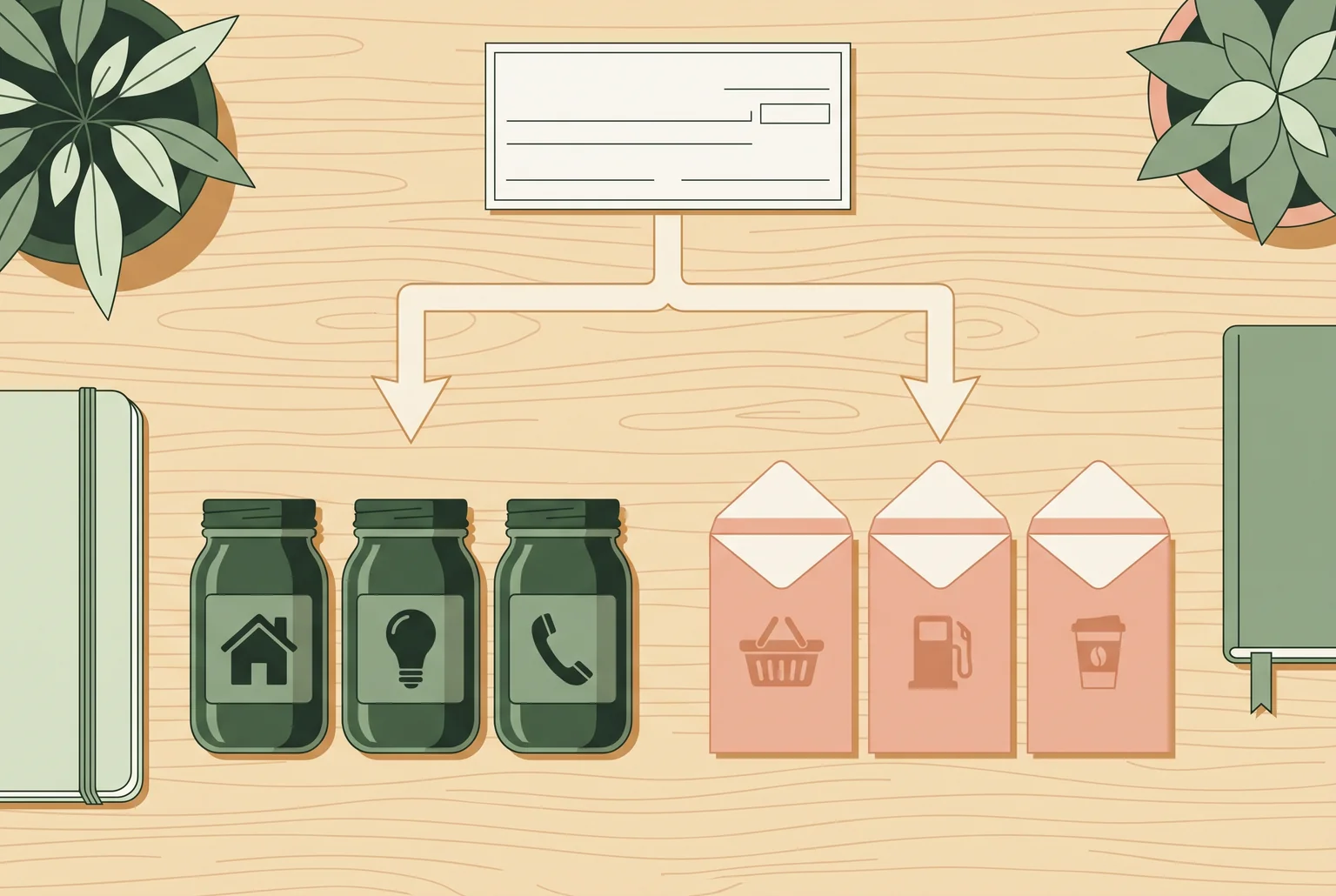
For example, this made-up two-check month shows how the low point can differ from the amount left at month end. Every bill and spending amount is hypothetical. The calculation method is simple: start with the posted balance, add each deposit on its arrival date, subtract each expense when it is expected to clear, then find the lowest running balance before the next deposit. Replace the figures with your statements, due dates, and receipts.
| Day | Money in or out | Amount | Running balance |
|---|---|---|---|
| Start | Opening balance | $0 | $0 |
| 1 | Take-home paycheck | $1,950 | $1,950 |
| 2 | Rent | $1,250 | $700 |
| 5 | Utilities | $140 | $560 |
| 8 | Groceries | $180 | $380 |
| 10 | Transport | $80 | $300 |
| 12 | Phone bill | $75 | $225 |
| 14 | Groceries before next check | $180 | $45 |
| 15 | Second take-home paycheck | $1,950 | $1,995 |
| 17 | Insurance bill | $120 | $1,875 |
| 20 | Utilities balance due | $95 | $1,780 |
| 22 | Groceries | $180 | $1,600 |
| 25 | Transport | $80 | $1,520 |
| 28 | Groceries | $180 | $1,340 |
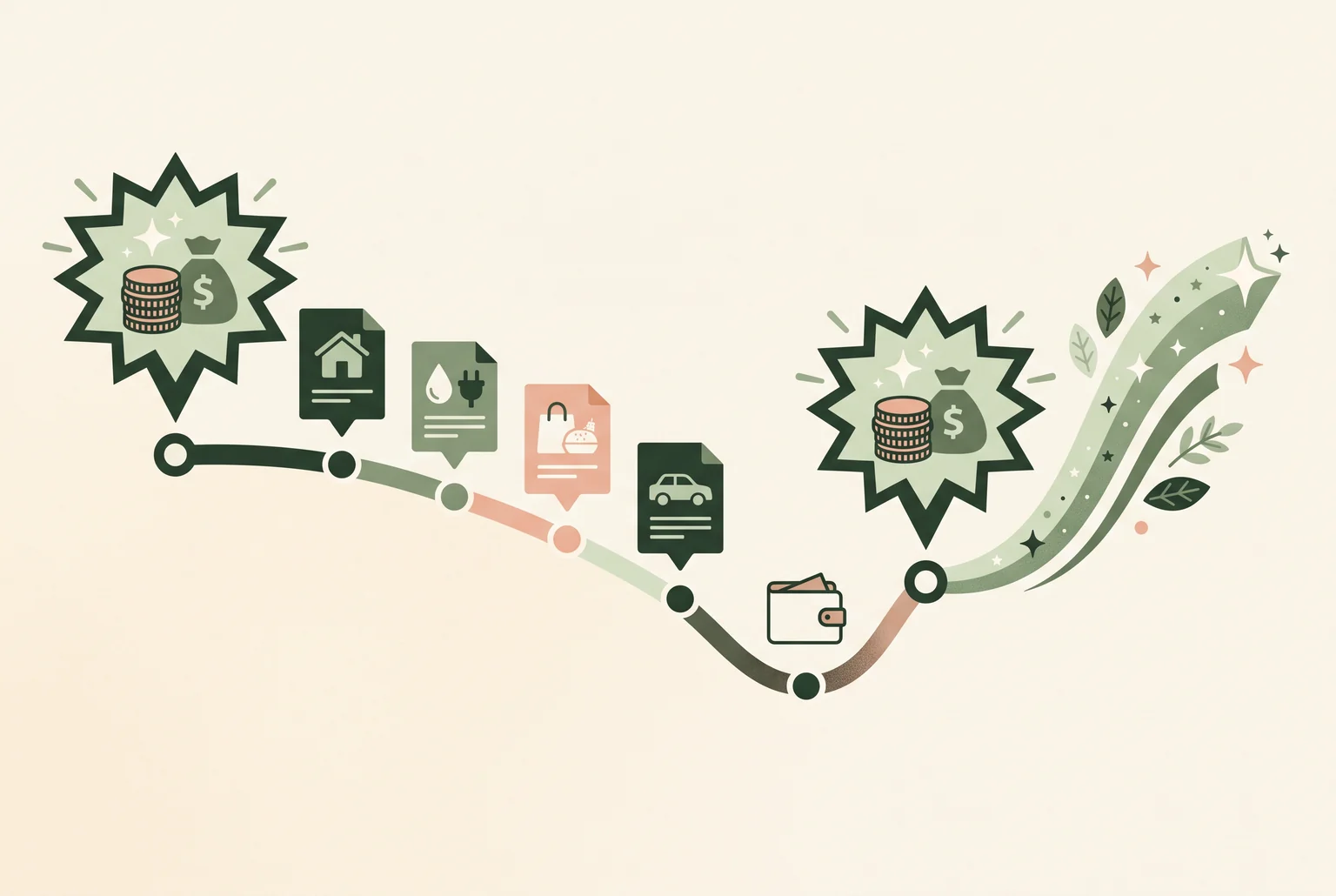
The two checks bring in $3,900. Rent is $1,250, while the other listed bills and weekly expenses bring total outflows to $2,560, leaving $1,340 in this simple example. The cash gets tight before the second check, when only $45 remains after the planned entries. That is the part a monthly sum hides.
The $1,340 remaining amount may still need to cover other bills, household needs, or the next cycle. If the real balance falls below the plan, update it from the transaction that cleared. Do not keep using the original estimate as if it were cash.
The month ends with $1,340, but the balance falls to $45 before the second deposit. If a $60 expense arrived on day 14, the plan would show a $15 shortfall even though monthly income exceeds the listed costs. Use that warning to call a provider and ask what options are available.
Biweekly pay can create a month with a third check. Build the regular plan around the checks you can count on in the current window. After an additional check arrives, decide which upcoming bill or buffer it will cover. Do not budget the same deposit before it arrives or assign it twice.
What to Do When the Numbers Still Do Not Work
If the pay dates and bill dates are clear but the month still has more required costs than take-home income, that is not a calendar problem alone. Use the 30-day plan to identify which bill comes first and what amount is missing, then contact providers before the due date.
Ask the biller whether a due-date change, split payment, or hardship option is available. Write down the answer and the person or department you spoke with, then update the calendar only after the arrangement is confirmed. If the company cannot offer a change, keep the existing date in the plan.
The CFPB guide to emergency savings and cash flow notes that automatic transfers can cause overdraft fees when the checking balance is too low. If the cash is not reliable yet, review the balance before scheduling a transfer. A small amount you can leave in the account is more useful than an automatic transfer that creates a new shortfall.
When a shortfall affects essentials, look for local or employer assistance that fits the need, and get help from a qualified nonprofit counselor if you need someone to review the full picture. This article does not decide which bill to skip or which financial product to use. The first step is to know the numbers and contact the organizations involved.
Why Trust This Article
Cosmo Suite makes the Ultimate Budget Planner. The examples above are arithmetic using hypothetical amounts, not household data or customer results. The cash-flow steps draw on resources from the Consumer Financial Protection Bureau, Navy Federal Credit Union, and the Federal Reserve. Sources were checked on November 4, 2026; the Federal Reserve report covers its 2025 survey. General information only.
Where the Ultimate Budget Planner Fits
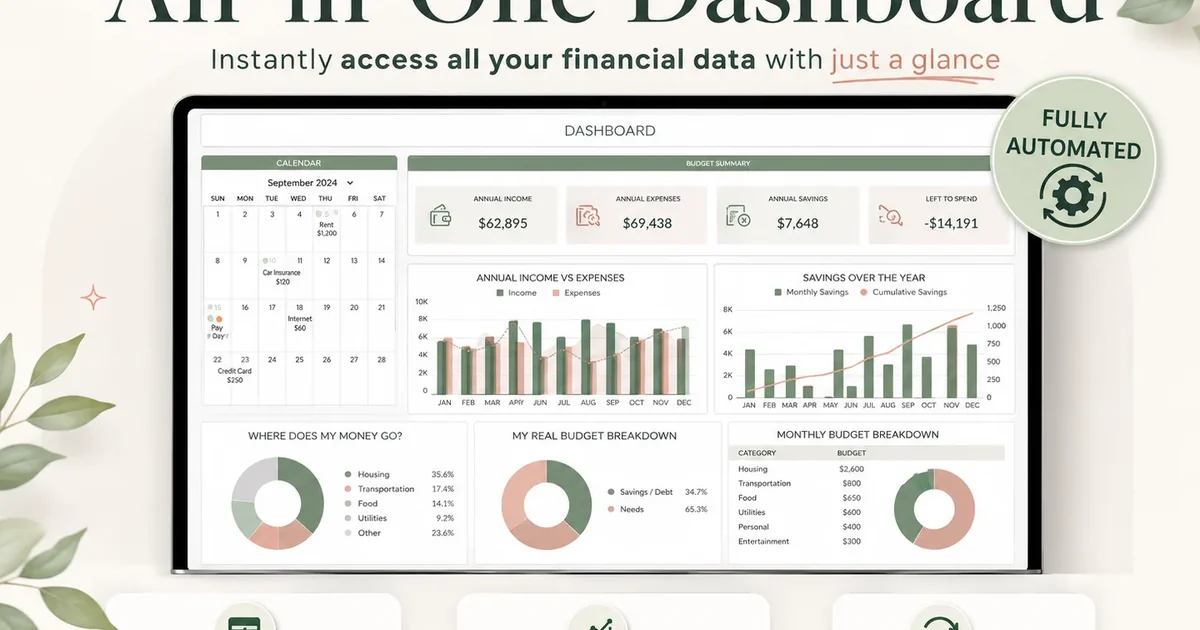
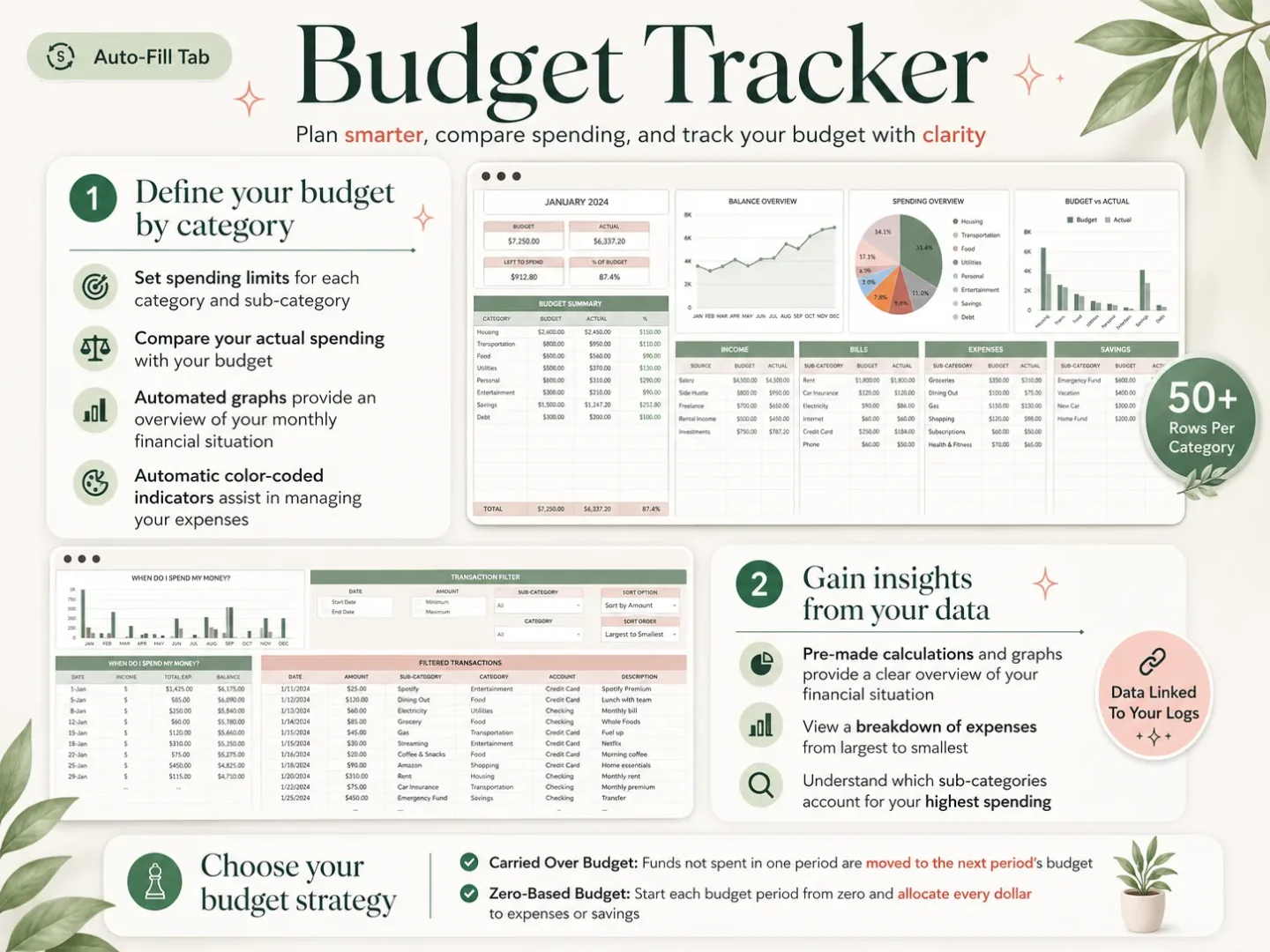
When the problem is seeing which paycheck covers which bill, a file with both monthly and paycheck views may help organize the plan. The Ultimate Budget Planner includes 28 tabs across four sections, Excel and Google Sheets versions, monthly tabs, dashboards, a paycheck dashboard, and sinking-fund tools. It does not move money, contact billers, or decide which expense to change.
The Ultimate Budget Planner spreadsheet is a reusable file, not a bank-sync app. You enter and review transactions yourself. If you use a spreadsheet, keep the next pay date, bill due date, and real balance current so the plan reflects cash you can use. If you prefer a paper calendar, the same dates and amounts still work there.
Begin with the next check and the next bill. Once the first 30 days are written down, compare what cleared with what you expected. Carry forward only the money that remains after the next set of bills is covered. Then adjust the next cycle using the dates and amounts you now know.
Frequently asked questions
How do I break out of living paycheck to paycheck?
Start by listing your posted balance, next pay date, and every bill due before that deposit. Then assign the available money to those bills and the essentials you need until payday. A calendar can show whether the problem is timing, a spending gap, or both.
Will I ever stop living paycheck to paycheck?
A cash-flow plan can help you see what each deposit must cover, but it cannot guarantee that the cycle will end in one month. If regular bills are higher than take-home income, due-date changes or spending changes may not be enough; contact billers early to ask what options they offer.
How much of a $1,000 paycheck should I save?
Do not choose a savings amount until you have set aside bills and essentials due before the next check. In the worked example, $1,905 of the first $1,950 check goes to listed costs before payday two, leaving $45. If a $1,000 check has a similar set of bills due, that example shows why a fixed savings percentage may leave too little. Check the balance before scheduling an automatic transfer, as the CFPB advises.
What should I do first when bills are due before payday?
Write down each bill's amount and due date beside the dates your pay arrives. If a due date creates a short week, ask the company whether it can move the date. Do not assume a change is accepted until the biller confirms it.
Can a budget fix it if monthly bills exceed monthly income?
A budget can show the size and timing of the gap, but it cannot remove a shortfall by itself. Contact billers or service providers before a missed payment and ask about due dates, payment arrangements, or hardship options. Recheck the plan after you know what they can offer.
Sources
- Consumer Financial Protection Bureau, An essential guide to building an emergency fund
- Consumer Financial Protection Bureau, Bill Calendar: Know what you owe and when it's due
- Navy Federal Credit Union, Budgeting Basics
- Board of Governors of the Federal Reserve System, Economic Well-Being of U.S. Households in 2025: Economic Hardships
Keep reading
Budgeting Basics
Lifestyle Inflation: Where a Raise Can Go
Lifestyle inflation can absorb a raise through small recurring costs. See an illustrative $300 monthly raise split and a simple budget check.
· 9 min read
Budgeting Basics
How to Save Money on Groceries: 12 Changes to Try
Try 12 practical grocery changes, estimate their weekly dollar impact from your own receipts, and track what works for your household.
· 10 min read
