How to Save Money on Groceries: 12 Changes to Try
Try 12 practical grocery changes, estimate their weekly dollar impact from your own receipts, and track what works for your household.
By Ultimate Budget Planner by Cosmo Suite · Editorial policy
Published · 10 min read
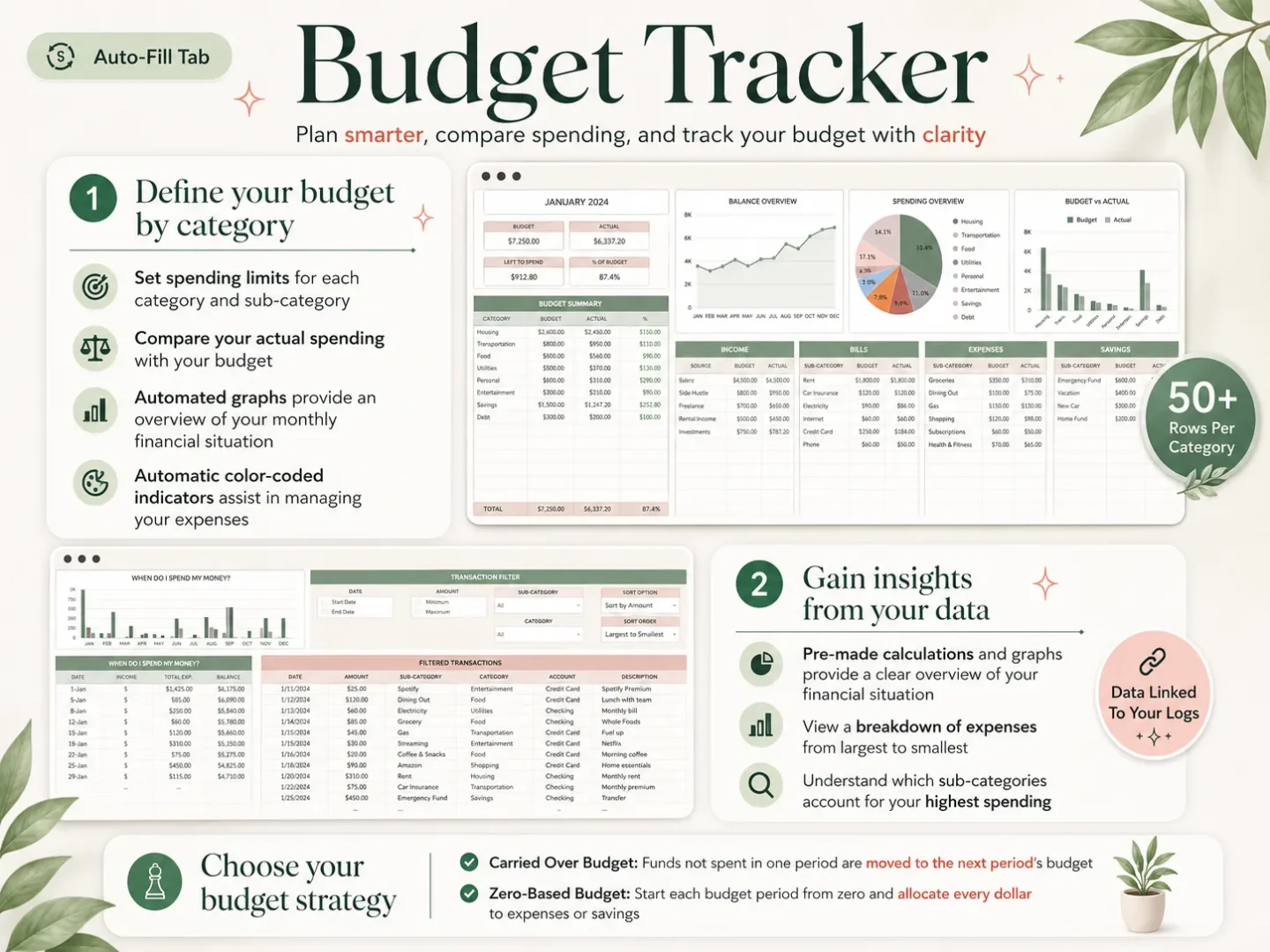
Your grocery total can rise even when you buy the same basics, because a second trip for one missing ingredient, forgotten food, or an unused bulk deal can undo a careful plan. Start by finding which pattern is happening in your kitchen.
You do not need to force every week into a tiny number; use receipts to set a workable target, plan around food you already have, and compare purchases where a better price would matter.
Key Takeaways
- Review a few recent grocery receipts before choosing a weekly target.
- Plan meals around ingredients already at home, then make a short list.
- Compare unit prices and skip larger packs you cannot use.
- Track groceries separately from household supplies and restaurant meals.
A Lower Grocery Bill Starts With Your Own Baseline
Your own recent spending is a better starting point than an online household target. Grocery costs shift with the number of people, location, dietary needs, and whether household goods or takeout are mixed into the total. A grocery baseline is a record of what your household usually spends, gathered over several weeks so one unusual shop does not set the target.
Gather four to eight weeks of receipts or card transactions, then mark each grocery-store purchase and remove non-food items such as detergent if you want to compare food spending alone. Add the remaining amounts and divide by the number of weeks; the result is a starting average, not a rule.
If you do not have old receipts, track the next four shopping weeks, including small trips that are easy to forget later, and note the store, date, total, and any unusual purchase. A holiday meal or restock trip can make one week look different, so keep the notes beside the amount.
USDA's Food Plans page lists monthly costs for several age groups and spending levels. Its latest table on the date checked here was August 2026. The costs assume food is prepared at home, and USDA explains household-size adjustments for the Thrifty Food Plan. Treat those figures as reference points, not a personal budget prescription. Because the USDA table uses food-plan baskets and monthly price adjustments, it cannot reflect every local store, dietary requirement, or household routine.
Grocery Savings: The Decision Table
Begin with a change you can repeat without buying food you will not use. Rank ideas by the amount your own receipt suggests, then by how easy they are to keep doing.
| Change to try | Estimate your weekly range | Best time to use it |
|---|---|---|
| 1. Check the pantry before shopping | $0 to the cost of a duplicate item you avoid buying | Food is already at home |
| 2. Use leftovers in another meal | $0 to the cost of ingredients the second meal would need | A portion is likely to remain |
| 3. Plan meals around food to use soon | $0 to the price of the replacement food you no longer need | An opened item or produce needs using |
| 4. Reuse an ingredient across meals | Difference between buying it twice and using one amount twice | Two planned meals share an ingredient |
| 5. Compare unit prices | (old unit price minus new unit price) times amount used | A repeat item comes in different sizes |
| 6. Compare a store brand | (Usual price − alternative price) × quantity bought | The products are comparable for you |
| 7. Check the sale price for planned items | (Usual price − sale price) × quantity you would buy anyway | The item is already on your list |
| 8. Apply a coupon to a planned purchase | Final price without coupon − final price with coupon | The coupon changes the price you pay |
| 9. Compare regular and bulk packages | Price difference minus the value of any amount you will not use | You can store and finish the larger amount |
| 10. Compare frozen or canned with fresh | Difference in price per usable amount | Either form works for the meal |
| 11. Reduce duplicate quick trips | Cost of items bought twice that one list could prevent | Small extra visits add items to the cart |
| 12. Review one week of receipts | Difference between the planned amount and avoidable extras | The grocery total is hard to explain |
Start each range at no savings: some weeks bring no savings, and some changes will not fit your household. Set the high end from your receipt, package label, or store price, then rank changes by that amount. These are calculations to make, not promises of typical savings. Consumer Reports' unit-pricing guide explains how unit prices help compare different package sizes and why a larger pack can still go to waste. Check the shelf label, package size, and whether you will use it.
The Worked Week
Here is an illustrative calculation, not a store-price survey. Suppose a household usually buys three 16-ounce bags of oats at $3.00 each. A 48-ounce package costs $7.20. The package costs $1.80 less for the same amount of oats, if the household will use all of it and has room to store it.
| Money in | Money out | Left |
|---|---|---|
| Grocery amount set aside: $120 | Usual oats: $9.00 | |
| Larger package: $7.20 | ||
| Planned grocery cash: $120 | Difference on oats: $1.80 | $1.80 stays available |
The example only works if the prices and quantities match your store. Check the unit price on the shelf or divide price by ounces yourself. If you would throw some of the larger pack away, the lower sticker price is not a saving.
Check the Kitchen Before You Make the List
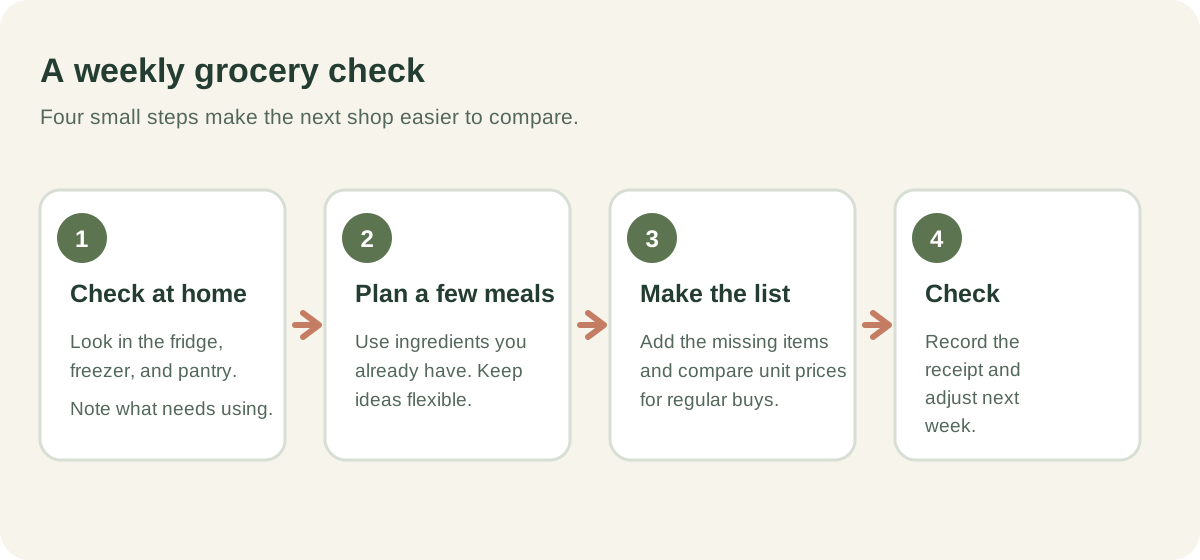
Look through the refrigerator, freezer, and pantry before deciding what to buy, then put the items that need using soon in one short list. Choose meals that use those ingredients and add only the missing pieces.
This does not require a seven-day menu with every meal fixed. A few flexible meal ideas can use the same ingredient in different ways. A unit price is the cost for a standard amount, such as one ounce or one pound; it lets you compare package sizes on the same basis. For example, cooked beans can go into a soup one night and a rice bowl another day. Choose foods your household already eats so the plan stays realistic when the week gets busy.
USDA's MyPlate budget guidance recommends using pantry items in multiple meals to reduce waste. The practical payoff is fewer duplicate purchases and a shorter list to check in the store. Keep a note of what is left after the week so your next plan starts from the real pantry, not memory.
The same check can fit on one small note: what you already have, what meals use it, what is missing, and what the receipt says.
Compare the Price You Pay Per Unit
When two packages differ in size, compare their price per ounce, pound, or count. Divide the package price by the quantity: a $4 package with 32 ounces costs 12.5 cents per ounce, while a $3 package with 20 ounces costs 15 cents per ounce. The larger package has a lower unit price, if you can use it all.
Consumer Reports' October 2, 2026 guide describes unit pricing as a way to compare products sold in different package sizes. It also points out that stores may show unit prices inconsistently. Use the same unit for both options and compare like with like, including the brand or type you actually want.
Store brands can be another comparison, but check ingredients, size, and quality for the item. Try one replacement at a time, because a cheaper package does not help the grocery budget if the household will not use it.
Let the Weekly Grocery Line Carry Into the Next Trip
Choose a grocery amount that reflects your recent spending and current needs. If your usual week is $145, a sudden $60 target may be hard to follow; a grocery budget is a working limit for planned food purchases that you adjust when household needs or local prices change. You could test a smaller change first, such as reducing the next shop by $5, then review the receipt and adjust.
Keep food purchases in one category and toiletries or cleaning products in household supplies; if you shop at several stores, record each trip under the same grocery category. That gives you a useful weekly total instead of a few disconnected transactions.
At the end of the week, compare planned and actual spending, then note what changed: a price, a guest, a forgotten ingredient, or a meal that did not get made. Carry that detail forward so next week fits your real routine.
Try one change at a time for a month. Keep the usual plan in week one, then change one repeat purchase in week two, one meal plan in week three, and your list in week four. Write the receipt amount and the reason for any unusual trip. That gives you a fairer comparison than changing several habits at once.
| Week | What to record | What to learn |
|---|---|---|
| 1 | Grocery total and items discarded | Which categories or foods move the total? |
| 2 | One repeat item and its unit price | Does another size or brand cost less per unit? |
| 3 | One meal planned from food already at home | Did the plan replace a purchase you would have made? |
| 4 | Grocery total, including small trips | Did the change hold through a normal week? |
This household check does not control every price or shopping condition. Keep the items, store, and quantity comparable where you can. If prices or household needs changed, note that beside the amount instead of treating the difference as a saving.
Why Trust This Article
We are the Cosmo Suite team that makes the Ultimate Budget Planner, so we sell a spreadsheet that can track a grocery category. The USDA reference costs and unit-pricing guidance above come from the linked sources, checked October 15, 2026. Store prices vary by location and date. Read about us and contact us with a correction. Our editorial policy explains how we prepare and correct blog posts. Methodology: we checked USDA reference costs and unit-pricing guidance against the linked sources on October 15, 2026; the grocery calculation is a labeled illustration, not a store-price survey. This is general information, not financial advice.
Where the Ultimate Budget Planner Fits
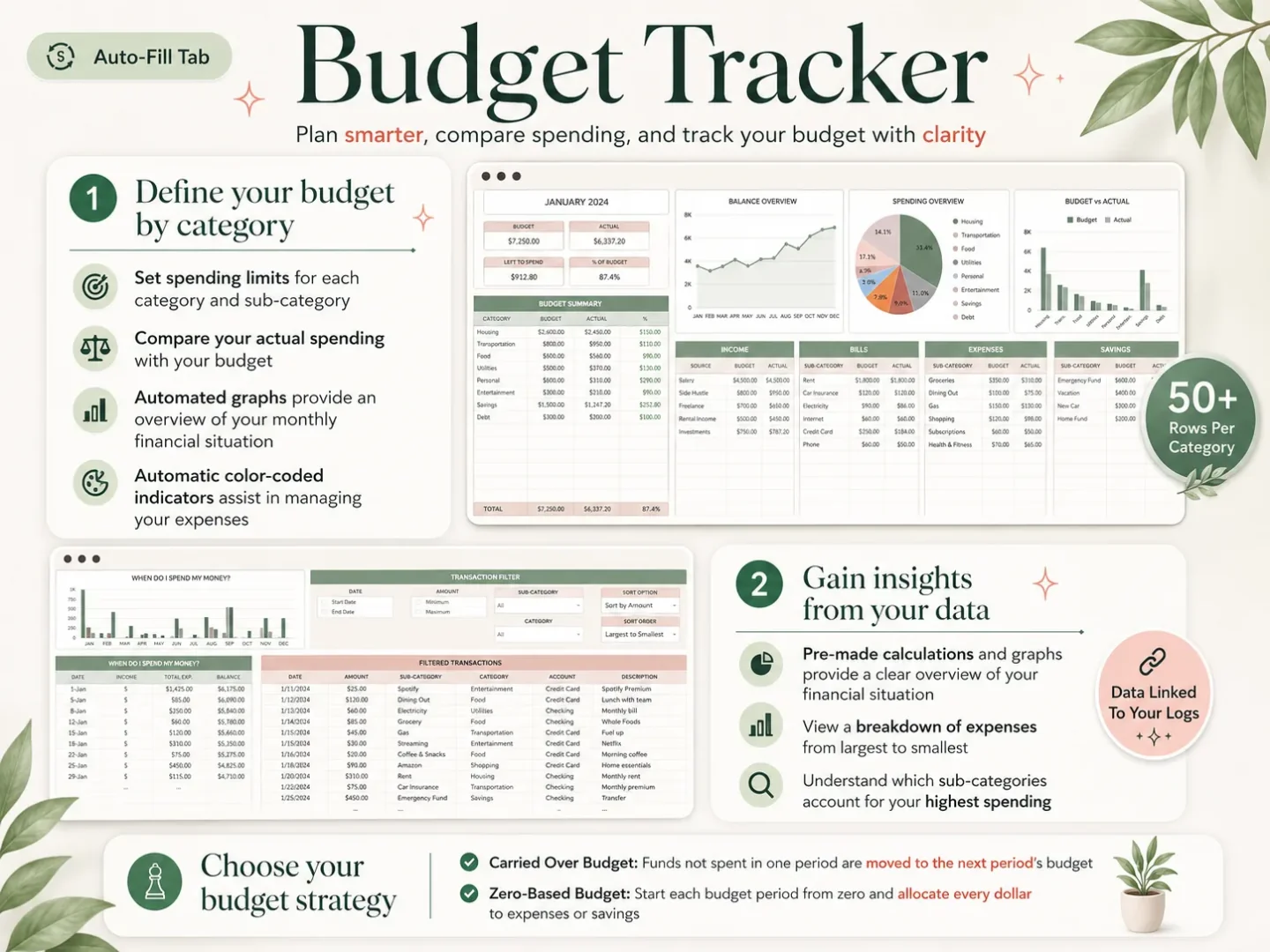
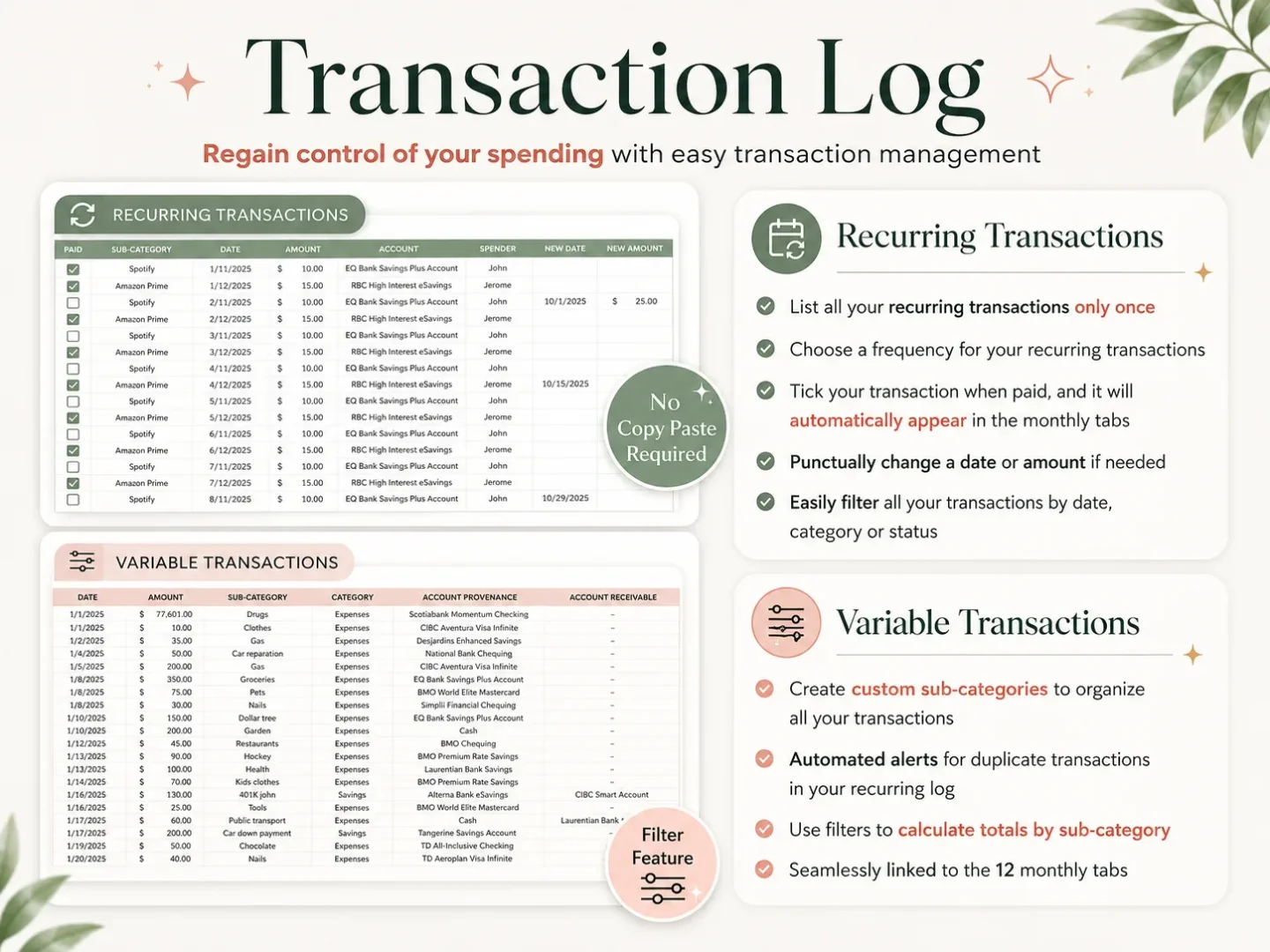
If you want groceries beside the rest of the month, a spreadsheet can keep the category with your other budget lines. The Ultimate Budget Planner includes 28 tabs across four sections, Excel and Google Sheets versions, auto-fill tabs, and automated dashboards. Its monthly tabs show budget versus actual.
That can help you compare the grocery amount you planned with what you entered during the week. The Transactions tabs are where purchases are recorded; the spreadsheet does not connect to a bank or import transactions. If manual entry is the part you are likely to skip, a bank-sync app may fit better. You can see the Ultimate Budget Planner's included tabs and formats before deciding whether a file suits your routine.
You can also use the same approach in a blank sheet: enter a weekly grocery target, record each trip, and compare the total at the end of the week. The budget spreadsheet guide explains how a transaction can feed monthly and paycheck views. The Google Sheets budget template guide shows how to build and track a budget in a sheet. The Ultimate Budget Planner includes both Excel and Google Sheets files.
Frequently Asked Questions
How can I save money on groceries each week?
Begin with food you already own, plan a few meals around it, and shop from a short list. Compare unit prices for repeat purchases, but check package size and whether you can use the food. Record your total so you can see which change worked in your store and household.
How can I spend only $100 a month on groceries?
A $100 monthly amount may not cover the needs of every household. USDA's food plan costs vary by age and spending level, and the Thrifty Food Plan also uses household-size adjustments. Check the current table and local prices before deciding whether a target is workable.
What is the 5-4-3-2-1 grocery rule?
It is an informal list-making prompt with different versions online. It is not a USDA standard or a required way to shop. If a fixed count makes shopping easier, adapt it to your meals and budget. The value is in arriving with a list that reflects the meals you intend to make and the food you already own.
Is $1,000 a month a lot to spend on groceries?
It depends on household size, location, and what the total includes. Compare several recent months and separate groceries from restaurant meals, toiletries, and cleaning products. Then consider whether the amount covers the food your household needs without making the rest of the budget difficult.
Can you live on $200 a month for food?
There is no single answer for every household. Local prices, household size, dietary needs, and food access all matter. USDA's food plan table can provide a reference, but it cannot confirm that a fixed amount is enough for your situation. If food is short, local food assistance may help.
How do I know if a grocery deal will save me money?
Compare the same unit, such as ounces or pounds, and account for the quantity you will use. A lower unit price can still mean a larger checkout total. If some of the food spoils or sits unused, you paid for more than you needed.
Frequently asked questions
How can I save money on groceries each week?
Start with food already in your kitchen, plan a few meals around it, and shop from a short list. Compare unit prices for items you buy often, then write down what you actually spent. Your receipts will show which changes save money in your store and household.
How can I spend only $100 a month on groceries?
A $100 monthly target may not cover a household's needs. USDA food plan estimates vary by age, household size, and location, and the Thrifty Food Plan assumes meals are prepared at home. Check the current figures and your local prices before setting a target.
What is the 5-4-3-2-1 grocery rule?
It is a shopping-list prompt some people use to choose a set number of produce, protein, grain, and other items. Versions vary, so it is not an official nutrition or budget standard. Use quantities that fit your meals, pantry, and budget.
Is $1,000 a month a lot to spend on groceries?
It depends on how many people you feed, where you live, and what you count as groceries. Compare it with your own recent months and separate food from household supplies or restaurant meals before deciding whether the amount fits.
Can you live on $200 a month for food?
It depends on household size, location, available food, and what the amount needs to cover. USDA food plan tables offer reference costs, but they are not a promise that a specific budget will work for every household. Check local prices and support options if food is short.
How do I know if a grocery deal will save me money?
Compare the price per ounce, pound, or other useful unit, and buy only an amount you can use. A lower unit price is not a saving if the extra food spoils or the larger package strains this week's cash.
