Budget Template for Couples: Split Shared Costs Fairly
Build a budget template for couples that separates shared bills, personal spending and savings goals, with a worked month for two different incomes.
By Ultimate Budget Planner by Cosmo Suite · Editorial policy
Published · 9 min read
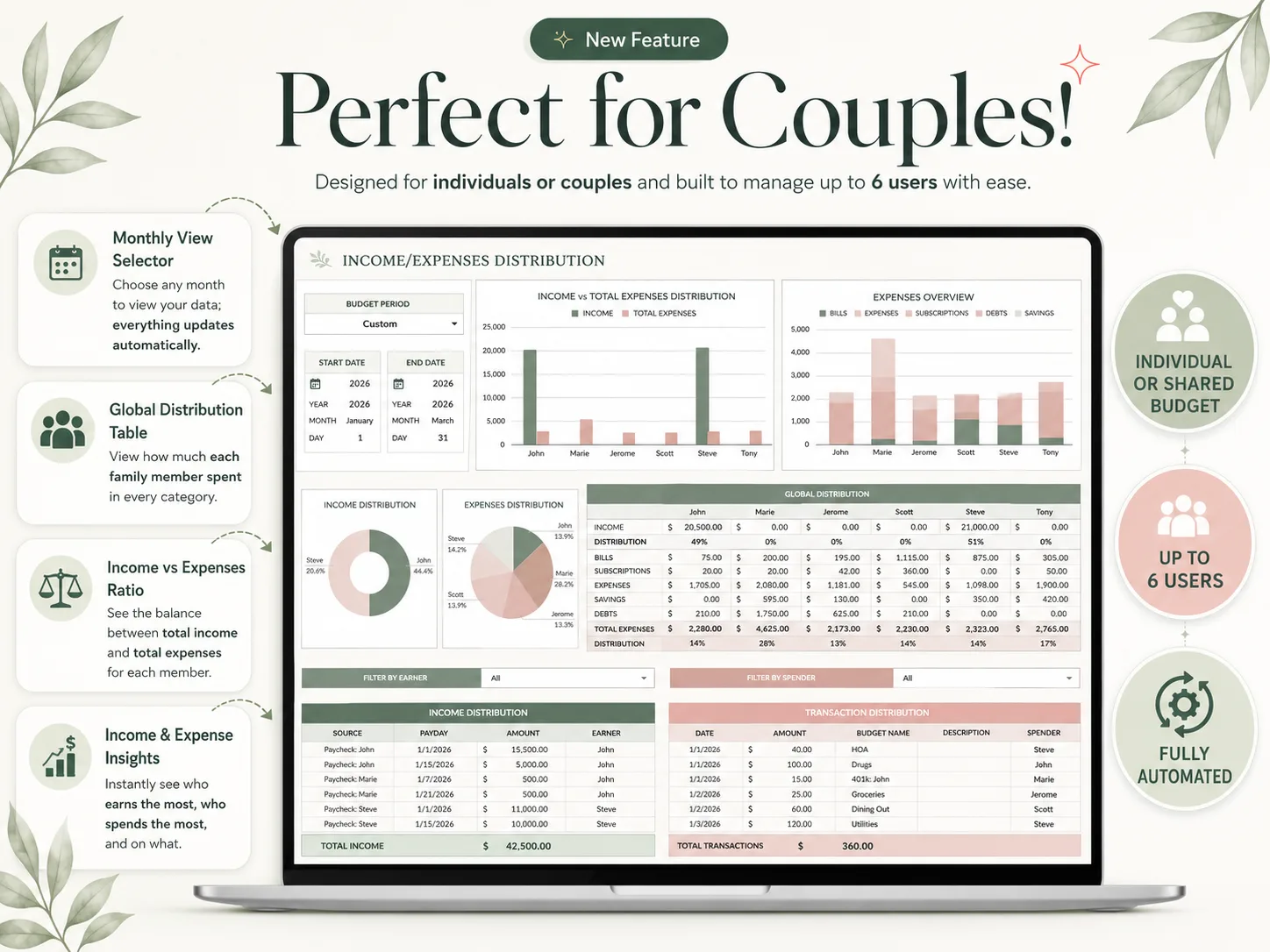
One person's payday arrives on the 9th. The other is paid on the 1st and 15th. Rent is due on the 1st, and groceries come out of whichever account is handy. At the end of the month, both have spent money on the household, but neither can tell whether the bills were split as agreed.
Maybe shared expenses sit beside personal spending. Perhaps you are both using different payday calendars. Or you have not agreed on a repeatable split. A couples budget template can show those decisions without requiring every purchase to come from one joint account.
Key Takeaways
- List both take-home incomes, shared costs, personal expenses and joint goals separately.
- Choose an equal or income-proportional split together, then write down the rule.
- Plan around actual payday dates when bills fall before one partner is paid.
- Keep the worked budget simple enough that both people will update it.
A Shared Budget Needs Shared Definitions
A couple's budget works when both people agree what counts as shared, what stays personal and when a contribution is due. The spreadsheet can add the amounts, but it cannot decide which purchases belong in each category.
Start with the household costs you both recognize: housing, utilities, groceries, childcare, insurance or subscriptions used by both. Add a separate personal list for costs each person handles on their own. If an expense is uncertain, discuss it before putting it in the shared column.
A shared expense is a cost you have both agreed to cover as a household. It does not have to be paid from a joint account. One person can pay the bill and record the other person's agreed contribution in the budget.
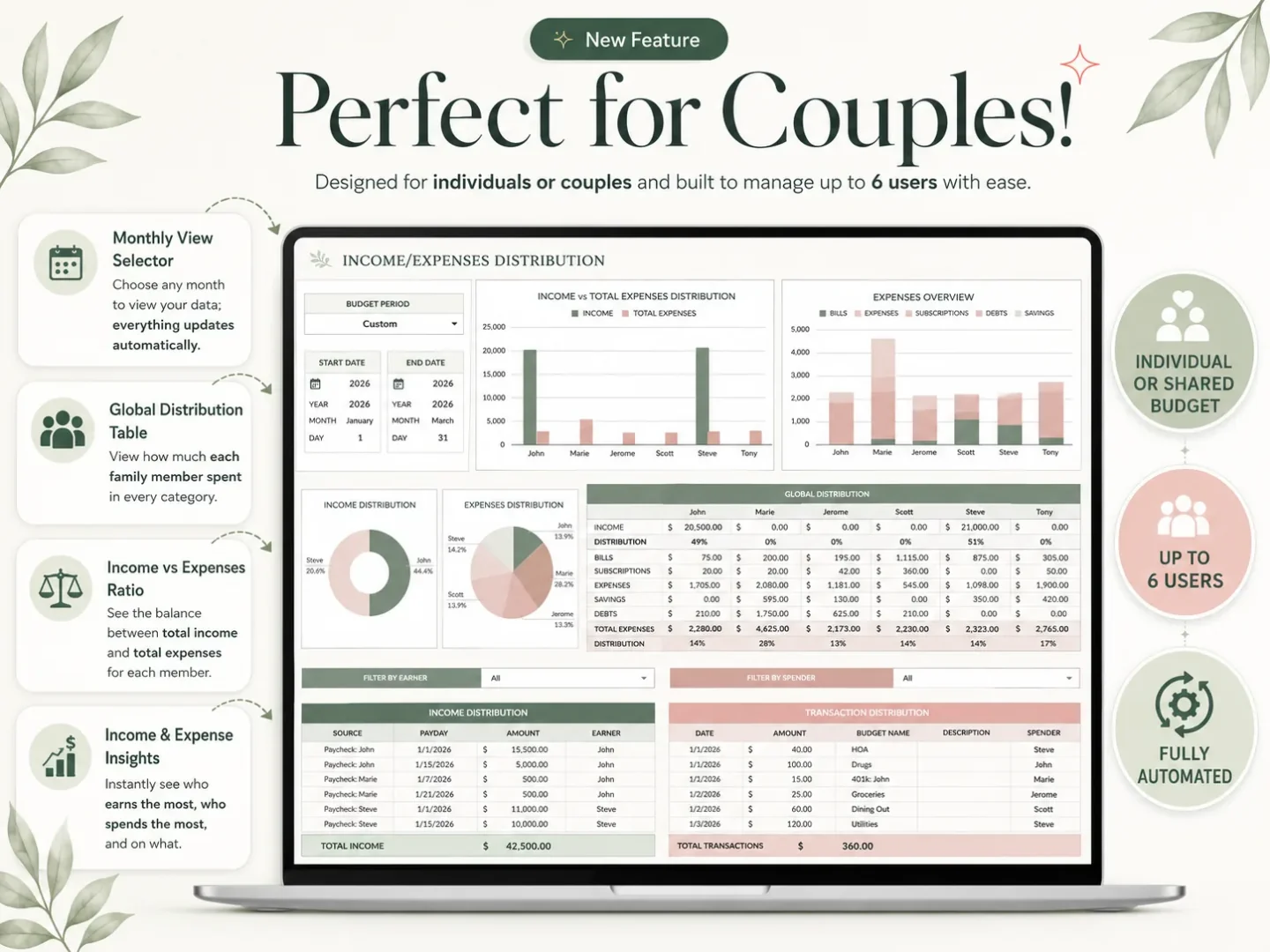
The category matters when one person sees a restaurant meal as household spending and the other sees it as personal. Agree on the rule first. Then the record can show whether the agreed amount was met. If you'd like a ready-made shared file, the Ultimate Budget Planner includes an income distribution view.
Budget Template for Couples: The Decision Table
There are a few workable ways to divide shared costs. The right choice depends on your incomes, accounts and preferences, so compare the method before setting up the sheet.
| Method | How it works | Helpful when |
|---|---|---|
| Equal split | Each person pays half of agreed shared costs | Take-home incomes are similar or both prefer a simple rule |
| Income-proportional | Each contributes the same percentage of combined take-home pay | Incomes differ and both want contributions to reflect that |
| One account, shared pool | Both transfer agreed amounts to a household account | Bills are paid from one place and both want a shared balance |
| Separate accounts, shared list | Each keeps an account and records household contributions | You want visibility without combining accounts |
| One pays, one reimburses | One person pays a bill, and the other sends an agreed share | A bill cannot easily be split at checkout |
Couples define a fair split in different ways. Write the rule next to the budget, including what happens to irregular costs such as annual insurance or home repairs. A written rule is easier to revisit than a memory of what each person thought they agreed to.
The Worked Month
This is an illustrative household, not a customer's data. Partner A takes home $1,950 in the month, and Partner B takes home $2,450. They agree that $2,400 in listed bills and $400 in shared goals are common costs. Their combined take-home is $4,400.
| Money in | Money out | Left |
|---|---|---|
| Partner A: $1,950 | Shared bills: $2,400 | |
| Partner B: $2,450 | Shared goals: $400 | |
| Total: $4,400 | Total: $2,800 | $1,600 |
If they split the $2,800 evenly, each contributes $1,400. If they split in proportion to income, A contributes about 44% ($1,240) and B about 56% ($1,560). The household still has $1,600 before personal spending and any other costs. The difference is who contributes how much, not whether the household total changed.
The couple can add another row for the actual due dates and the account that pays each bill. That matters if one paycheck arrives after rent is due. A monthly total answers whether the plan adds up; it does not show whether money is available on a particular day.
Choose a Split You Can Explain in One Sentence
An equal split is easy to calculate: divide each shared expense by two. It can suit a couple with similar take-home pay, or two people who prefer not to adjust contributions whenever income changes.
An income-proportional split uses each person's share of combined take-home pay. In the example, A brings in about 44% of the total and B about 56%. The same percentages can be applied to agreed shared costs. Recalculate if income changes enough that the old split no longer feels workable.
There are also arrangements that are not a strict percentage. One partner may cover rent while the other pays groceries and utilities. That can work if both can see the totals and agree that the combined contributions are reasonable. Add the costs before drawing conclusions from one large bill.
Avoid changing the rule in the middle of a month without recording it. If one person covers an unexpected shared purchase, note whether it is a gift, a temporary advance or part of the next month's contribution. The label keeps the balance from turning into a disagreement later.
Keep Personal Spending Visible and Private Enough
Sharing a household plan does not mean every purchase needs joint approval. Put shared bills and goals in the common view, then leave personal spending as separate totals if that suits you. Some couples want to see category details; others only want to know that each person has covered their agreed contribution.
Decide what the shared sheet should show before inviting someone to use it. A simple setup might include take-home income, contribution, shared bills, joint savings goals and a personal amount for each person. It can omit transaction notes that neither partner needs to see.
For irregular purchases, choose a threshold that triggers a conversation. The threshold is a household agreement, not a spreadsheet rule. Add the purchase to the budget after the conversation so both people work from the same total.
If your spreadsheet is shared online, agree on a few habits: who enters transactions, how often the sheet is updated, and whether to add comments when a planned amount changes. Shared access helps only when the two of you use the same categories and timing.
Plan Bills Around Both Paydays
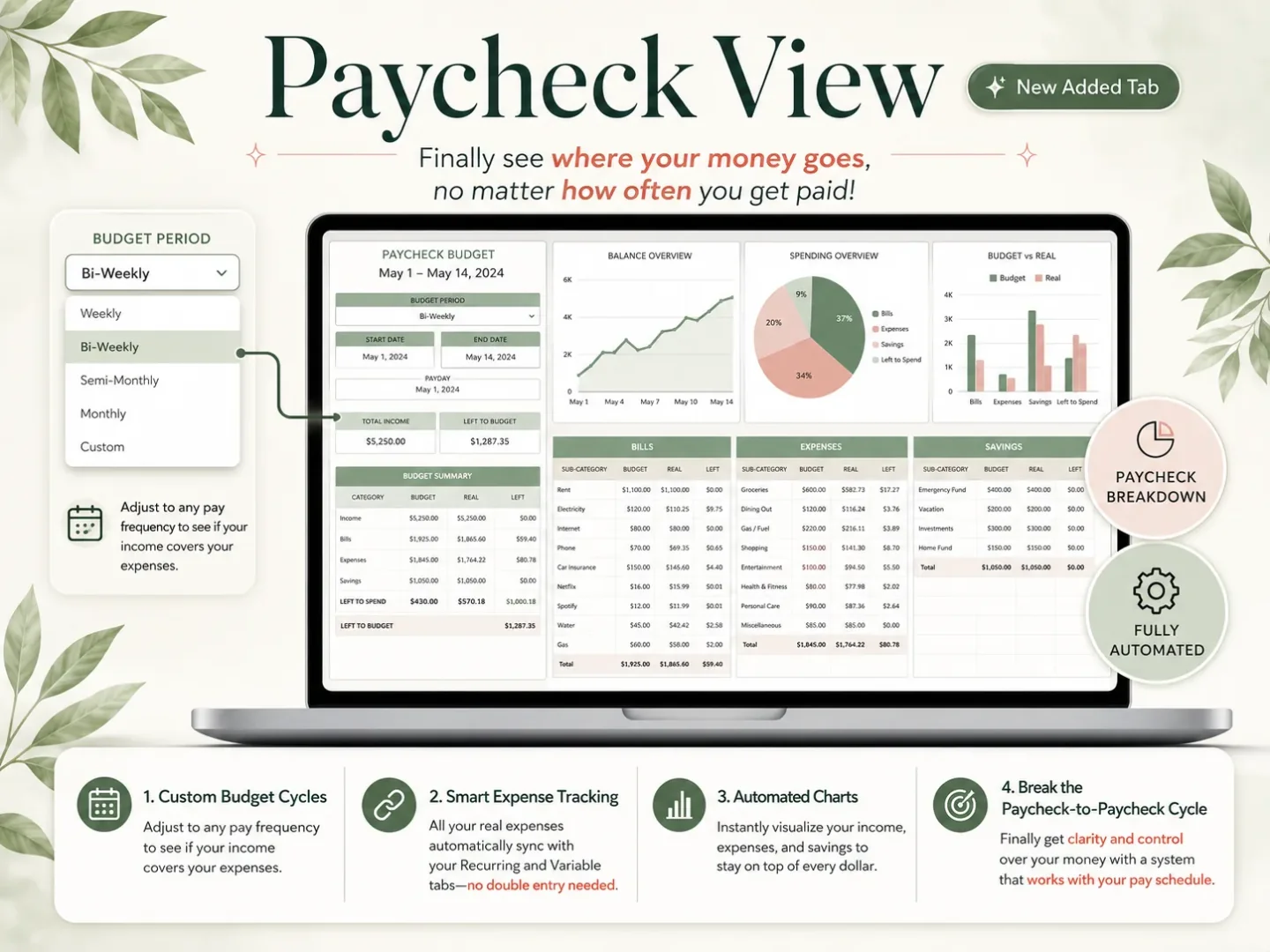
When partners are paid on different schedules, put both payday dates beside the bills. If rent is due before one person's paycheck arrives, assign the bill to the earlier income or agree how much stays in the account from the prior month.
For biweekly pay, use the money that actually arrives in that month. A two-paycheck month and a three-paycheck month do not have the same cash coming in. Do not build recurring bills around an average that is not available on each payday. The CFPB's bill calendar guide also recommends tracking when bills are due across the month.
Check the next two weeks together. Confirm which bills are due, which income arrives before then, and whether either person needs to transfer a contribution. It can be a short check-in with the same dates open for both people.
If keeping a record current feels like another job, reduce the detail. Enter shared transactions once a week, and leave personal items summarized. Choose the smallest amount of tracking that lets you answer: are shared costs covered before the next payday?
What to Put in the Template
A useful couples budget template needs a place for both incomes, shared bills, contributions and what's left after shared costs. It should also show each bill's due date and whether it is paid monthly or less often.
Add a line for each agreed joint goal, such as a trip or a future household purchase, only if you both want to track it. Keep these amounts separate from bills that must be paid. If a goal pauses for a month, the fixed bills can still be read clearly.
Then pick a review rhythm. Weekly works well for dates and upcoming bills; monthly works for checking whether category amounts need to change. If the couple is paid twice a month, the two checks can follow the paydays instead.
Use categories both people can explain. You do not need every category either person has ever used. Remove a line if it does not help you plan, pay a bill or see what remains.
Why Trust This Article
We are the Cosmo Suite team that makes the Ultimate Budget Planner. The worked month is illustrative and uses no customer records. The budget methods here are arithmetic choices, not a recommendation about how any particular couple should share money. Consumer.gov's budget guide is a neutral starting point for listing income and expenses. Check your own bills and payday dates before using an example as a plan. Read more about us and our editorial policy.
Where the Ultimate Budget Planner Fits
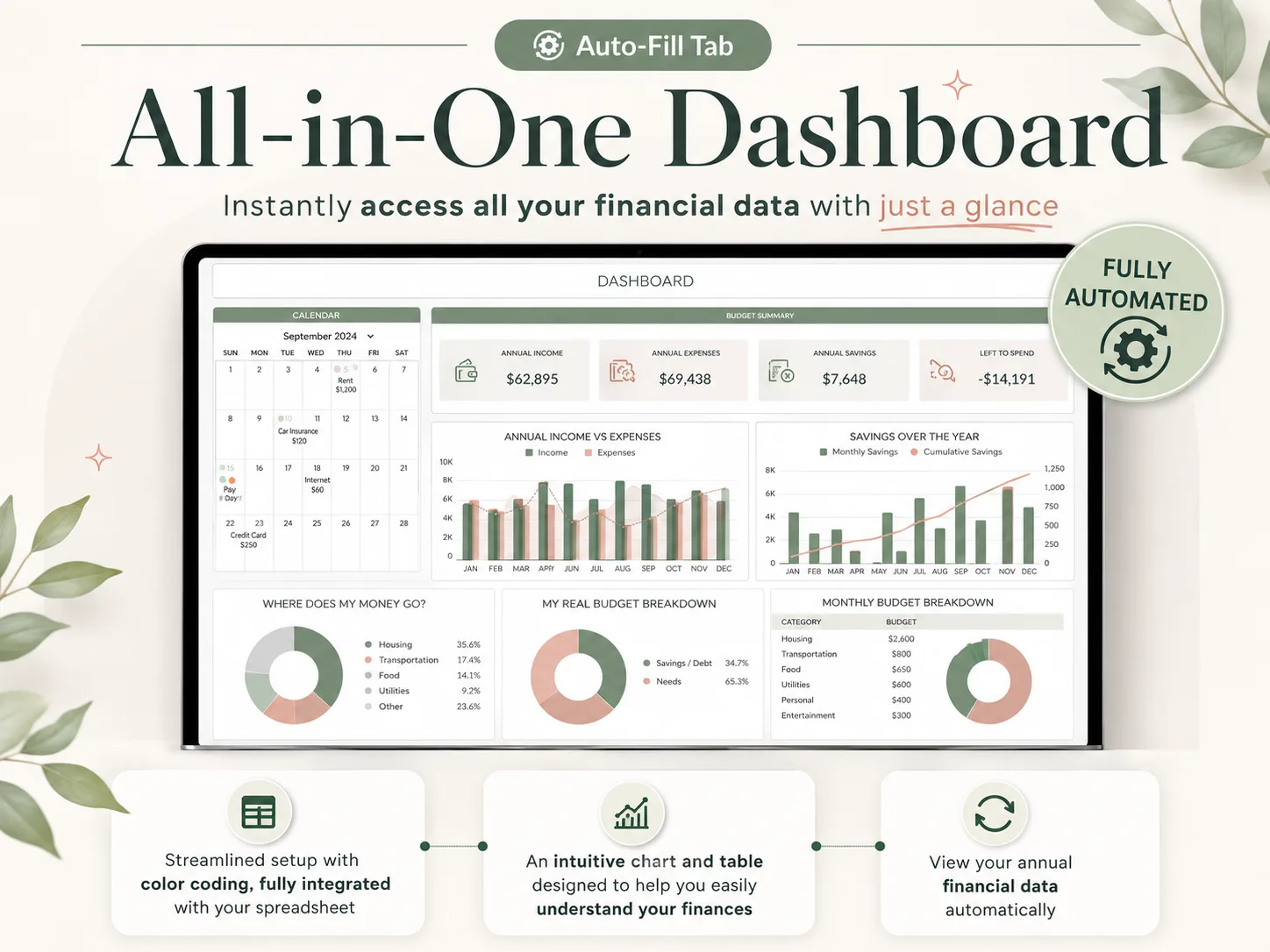
If you want a shared file with individual income and household totals in one place, the Ultimate Budget Planner includes Excel and Google Sheets versions. The file has 28 tabs across four sections, including auto-fill tabs and dashboards. It supports up to six users in one file, so both partners can work with the same budget.
The spreadsheet does not connect to bank accounts. You enter transactions yourself, which can be a poor fit if neither person wants to keep up with the entries. An app may suit you better if you want automatic bank sync or need quick mobile entry.
If you prefer a spreadsheet, see what the Ultimate Budget Planner includes and review the budget spreadsheet guide before choosing a format. The Google Sheets budget template guide covers the shared-file option in more detail.
Frequently Asked Questions
What should a budget template for couples include?
It should list each take-home income, agreed shared bills, personal costs and joint goals. Keep individual contributions visible, and add due dates if paydays differ. You can start with a small number of categories and add detail only when it helps both people make a decision.
Should couples split bills 50/50 or by income?
Either can work if both partners agree. A 50/50 split is straightforward. An income-proportional split ties each contribution to the share of combined take-home pay. Compare the result in dollars, then discuss whether it leaves each person with a reasonable amount for personal costs.
How do couples budget with different incomes?
Record each income separately, list the costs you share and choose a split method. Do not merge the two incomes into one number before deciding who contributes what. Keeping the amounts visible makes it easier to change the split if either income changes.
Can you budget together with separate bank accounts?
Yes. A shared budget can track household expenses and contributions while each person keeps a separate account. Agree on who pays each bill and when the other contribution is transferred. The spreadsheet records the plan; it does not require a joint account.
What if partners are paid on different days?
List each payday and bill due date. Assign a bill to income that arrives before its due date, or agree how much remains from the prior month. A monthly total can be balanced and still leave a timing gap, so check the calendar as well.
Can both partners edit one budget spreadsheet?
Yes. The Ultimate Budget Planner includes a Google Sheets version and supports up to six users in one file. Decide who enters each transaction and how often you both review the sheet. If you do not want to enter spending manually, consider a tool with bank import instead.
Frequently asked questions
What should a budget template for couples include?
Start with take-home income for each person, shared bills, personal expenses and savings goals. Keep the shared total separate from each person's own spending so both can see what is covered and what remains. Add due dates if bills need to be planned around different paydays.
Should couples split bills 50/50 or by income?
There is no single split that fits every couple. Equal shares are simple when incomes are close. A proportional split uses each person's share of combined take-home pay, which can make shared costs line up with different incomes. The template can show either method; the choice belongs to both people.
How do we budget when our incomes are different?
List each person's take-home pay separately, then agree which costs are shared. You can divide shared bills evenly or in proportion to income. Keep the calculation visible and leave personal spending as its own line for each person.
Can a couple budget with separate bank accounts?
Yes. A shared budget does not require a joint account. Track each person's contribution toward agreed shared costs, and keep individual accounts and purchases separate if that is how you manage money.
How do we budget together if we are paid on different days?
Enter each payday and the bills due before the next one. A monthly total can look balanced while a bill arrives before the money meant to cover it. A paycheck view can make that timing visible.
Can both partners edit one budget spreadsheet?
Yes, if you use a shared Google Sheets file and agree how to enter changes. The Ultimate Budget Planner includes Excel and Google Sheets versions and supports up to six users in one file. A spreadsheet requires you to enter transactions yourself.
Sources
Keep reading
Budget Templates
Budget Spreadsheets That Fill Themselves In (Matched to How You Get Paid)
Budget spreadsheet setup for any pay schedule: one transaction list feeds the month, paycheck view, bill calendar and yearly totals, shown on a $3,900 month.
· 9 min read
Budget Templates
Google Sheets Budget Template: Copy the Layout and Customize It (2026)
Google Sheets budget template layout to copy: 6 columns, 3 formulas and the 4 things Google's free Monthly budget template leaves out, plus a worked month.
· 8 min read
Budget Templates
Excel Budget Templates Compared: Free Options and a Year-Long Layout (2026)
Excel budget template options compared: Microsoft's free gallery, Vertex42, Tiller and ours, plus a worked $3,900 month and five checks for a file that lasts.
· 7 min read
