Gross vs Net Income: Which Figure Belongs in Your Budget?
Gross vs net income can show very different pay amounts. Learn which figure to use in a household budget, what deductions mean, and how to read a pay stub.
By Ultimate Budget Planner by Cosmo Suite · Editorial policy
Published · 8 min read
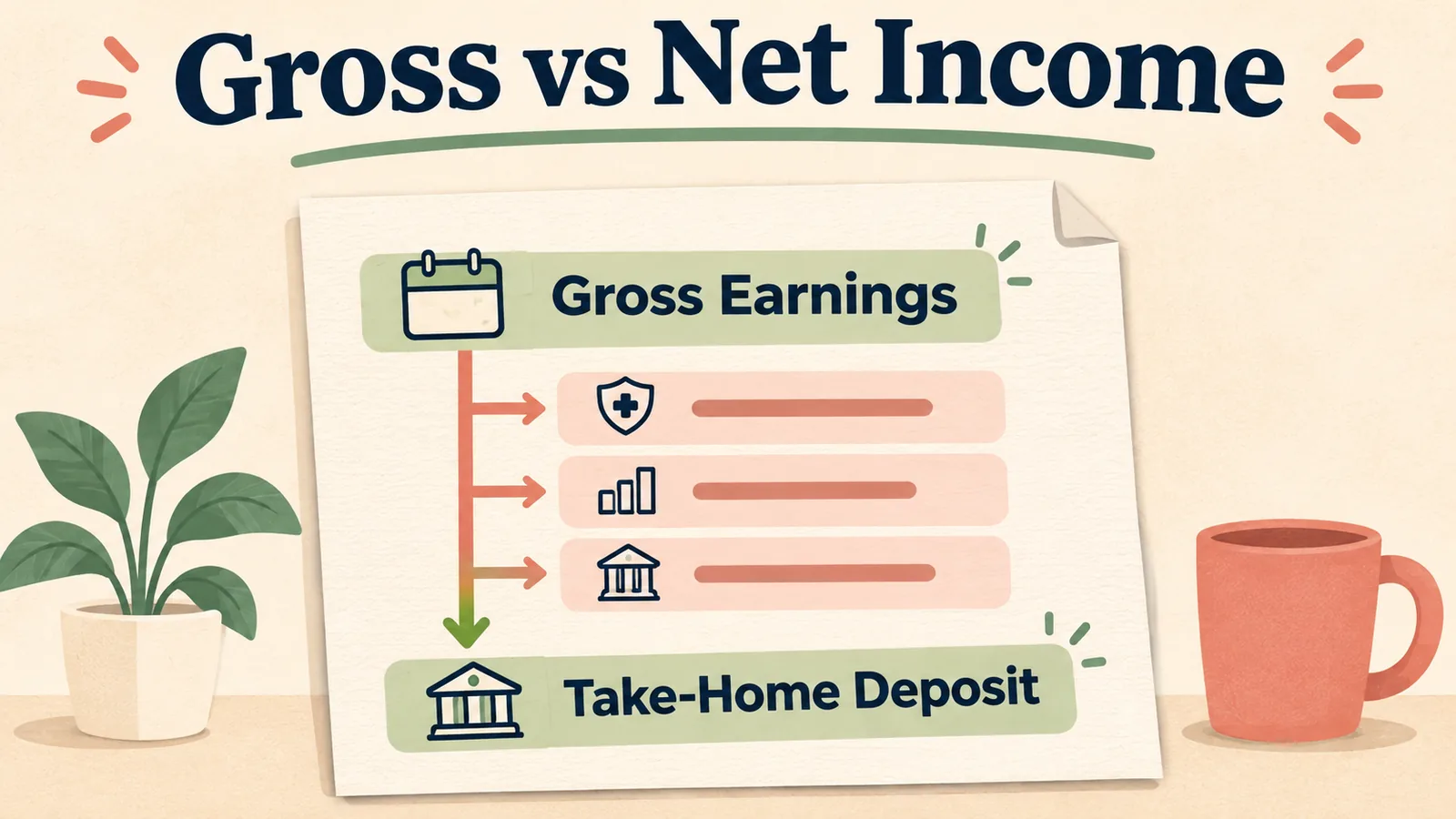
Your salary and your deposit are two different numbers. If rent and bills are due soon, seeing the smaller deposit can make it hard to know what belongs in the budget.
For a household cash budget, start with take-home pay, also called net pay. Gross pay helps you compare job offers and understand the deductions on your paystub. One is earnings before deductions; the other is what remains for that pay period.
Key Takeaways
- Gross pay is the amount earned before payroll deductions; net pay is the amount left after them.
- Use take-home pay for a budget that plans bills and spending from cash received.
- Keep the pay period and deposit date beside every income amount.
- If your budget starts with net pay, do not subtract the same payroll deductions again.
- The paycheck example below is illustrative arithmetic, not a tax estimate.
A Household Cash Budget Starts With Take-Home Pay
Use the amount that reaches you for a budget of bills and spending. Gross income helps explain a paycheck, but the gross amount is not all available in your account to pay this month's expenses.
The Consumer Financial Protection Bureau (CFPB) describes gross income as money earned before deductions and net income as paycheck money after taxes and other deductions. Its paycheck activity shows how a pay stub records the period, earnings and amounts taken out. Your net pay may arrive by direct deposit, payroll card or paper check.
If you want to see whether upcoming bills fit the money you will receive, list each take-home amount and its date. A budget spreadsheet that compares planned and actual spending can keep deposits beside the expenses they need to cover. Ultimate Budget Planner's paycheck budgeting workbook also includes a view for different pay cycles. For a weekly view, see the weekly budget template walkthrough.
Gross vs Net Income: The Decision Table
Gross pay is earnings before payroll deductions. Net pay is the paycheck amount after those deductions. Use the gross figure to understand compensation and the net figure to plan cash you can spend.
| Paystub number | What it means for an employee | Useful for | Budget note |
|---|---|---|---|
| Gross pay or gross wages | Earnings for a pay period before deductions | Comparing pay, checking earnings and understanding deductions | Do not treat the full amount as deposit cash |
| Taxable wages | Wages used for a particular tax calculation | Reading the tax section of a pay stub | This figure may differ from gross wages |
| Payroll deductions and withholding | Amounts taken from pay, such as taxes or elected benefits | Explaining the gap between gross and net | If using take-home pay, do not subtract these a second time |
| Net pay or take-home pay | The amount left after the paystub's deductions | Planning bills and household spending from received cash | Keep the pay period and date with it |
Words can shift by context. For a business, “net income” can mean something different from employee net pay. This article focuses on an employee's paycheck and household cash budget. When a form asks for income, use the form's definition instead of assuming it means the same amount as the deposit.
The Worked Month
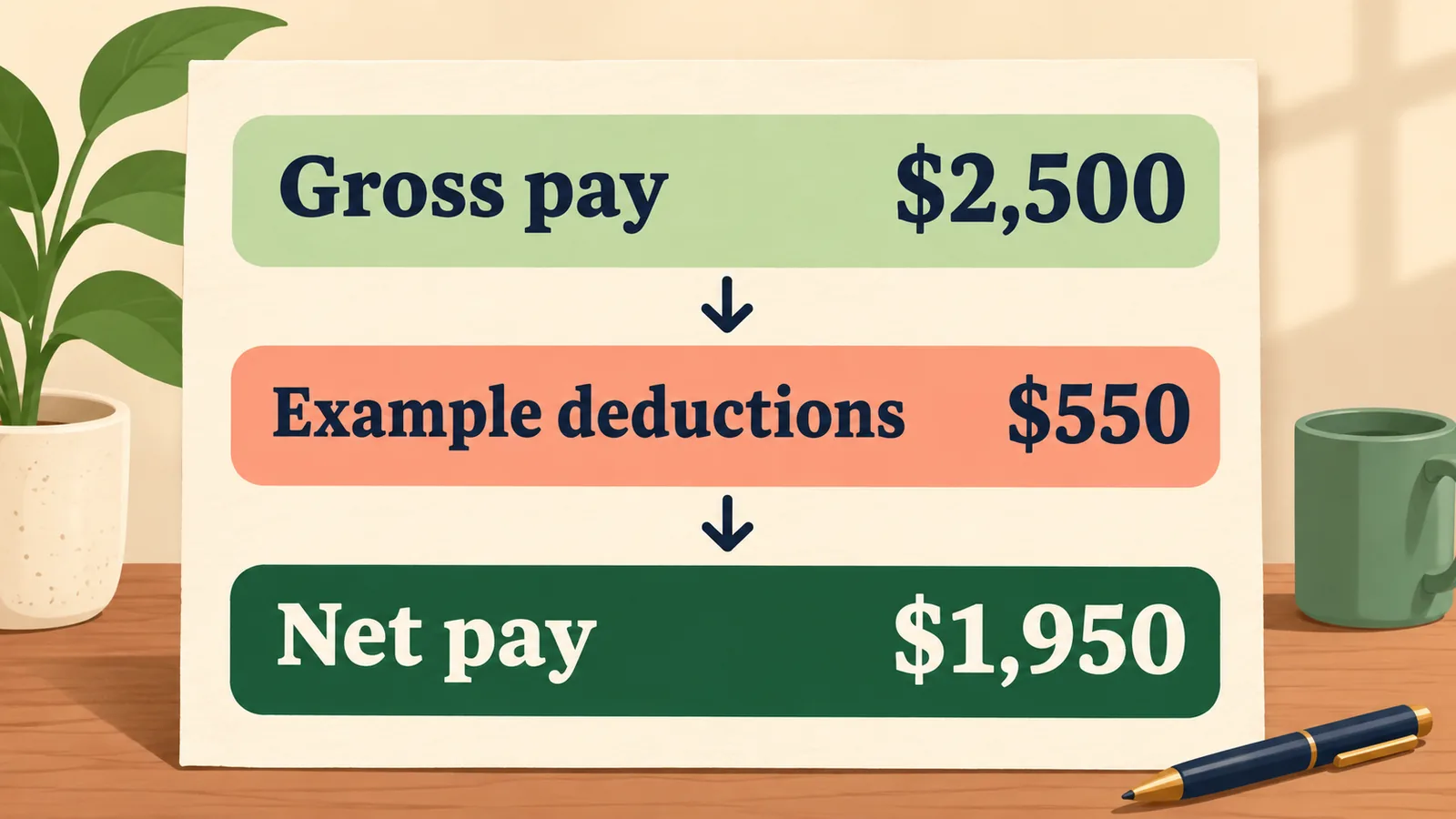
This fictional paystub uses round numbers to show the subtraction. It does not estimate any reader's taxes or benefits. Imagine a biweekly check with $2,500 in gross pay and $550 in combined example deductions. The check's net pay is $1,950.
| Money in | Money out | Left |
|---|---|---|
| Gross pay: $2,500 | Example deductions: $550 | $1,950 net pay |
| Two checks received this month: $3,900 net | n/a | $3,900 available before household expenses |
The $2,500 is the starting earnings figure in this example. The $550 was chosen to make the subtraction visible; it is not a standard deduction amount. Each check deposits $1,950. Two checks in the month provide $3,900 of cash for the household plan. A biweekly calendar can sometimes contain a third payday, so use the dates and amounts from your own pay schedule.
An annual average can help compare yearly figures. Your bills still have due dates, and each paycheck has an arrival date.
Read the Paystub From Earnings to Deposit
A paystub traces the trip from gross earnings to net pay. Read across the current-pay-period column first, then use year-to-date totals only when you need a cumulative figure.
Start with the pay period and pay date. They show which work period the statement covers and when the money should arrive. Then find gross wages, which may include regular wages and other earnings for that period. The details vary by employer and pay type.
Next, look at deductions and withholding. A statement can show federal income tax, Social Security and Medicare withholding, benefit premiums, retirement contributions or other deductions. Taxable wages may differ from gross wages because some deductions affect a particular tax calculation. One check cannot tell you your full tax bill.
Federal income tax withholding depends on information such as Form W-4, wages and pay period, as the IRS explains. Its 2026 Publication 15-T describes employer methods and tables for calculating withholding. If a deduction looks unfamiliar, payroll or HR can explain how it is classified on your statement.
Paystub layouts differ by employer. Look for the line called net pay, take-home or amount paid, then compare it with the deposit record if you are checking what reached your account.
Which Income Figure Fits the Question?
Choose the figure that matches the task. A monthly cash budget and an annual salary comparison ask different questions, so they do not need the same number.
| If you are trying to… | Start with… | Why |
|---|---|---|
| Plan household bills and spending | Net pay for each deposit | It is the paycheck amount available after payroll deductions |
| Compare two annual salary offers | Gross annual pay, plus pay frequency and benefits details | It shows compensation before payroll deductions |
| Check whether earnings on a stub look complete | Gross pay for that pay period | It is the starting amount before deductions |
| Understand why a deposit changed | Compare gross pay, deductions and net pay across stubs | A change in earnings or deductions can affect the amount received |
| Fill in a form that asks for income | The amount defined by that form | Programs and forms can set their own income rules |
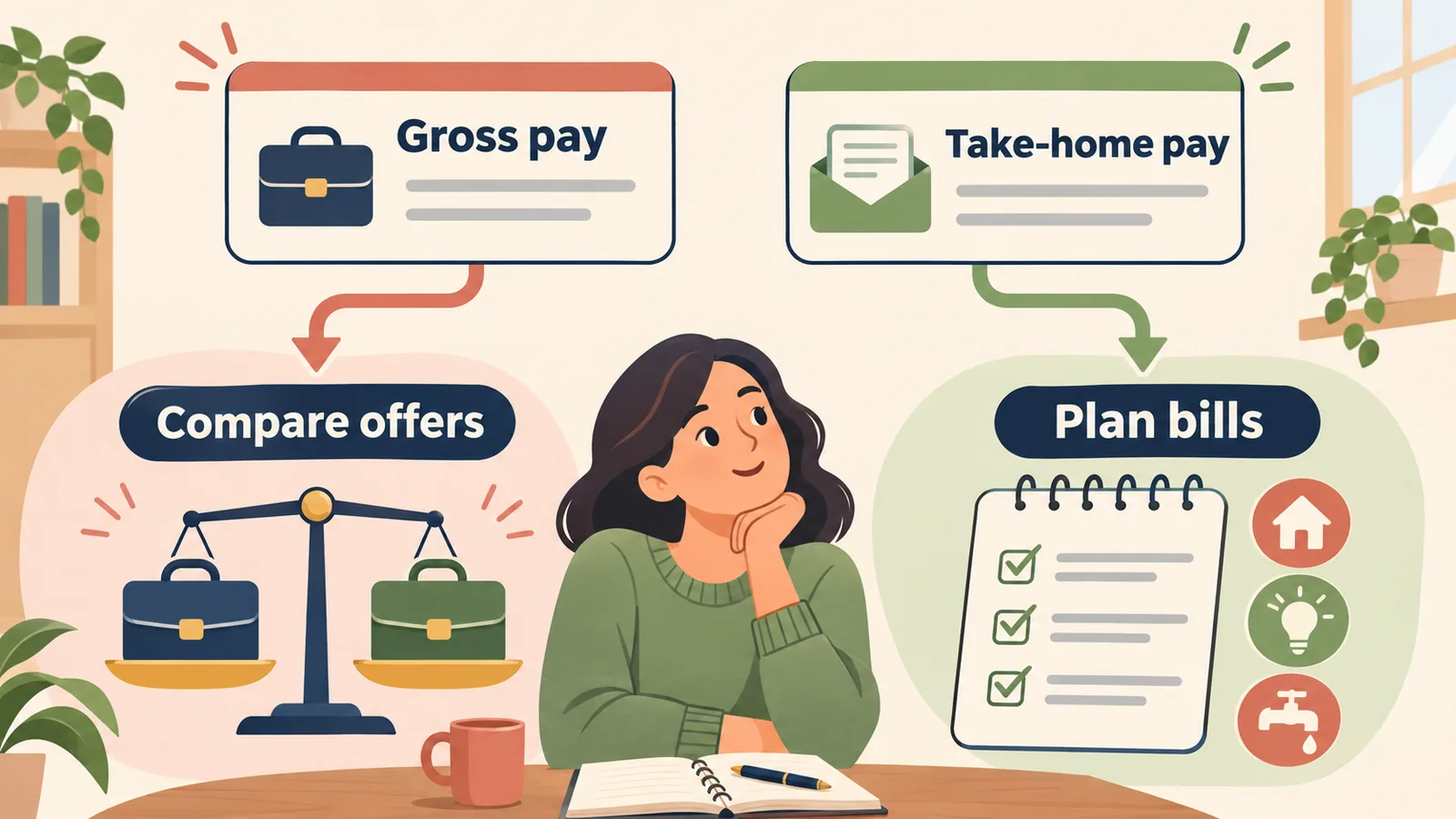
For household spending, start from deposits you can use. A salary offer is still useful to compare before deductions, though it does not show how much arrives in each check. Withholding can vary with an employee's information and payroll period, and benefit choices can change deductions. ADP's payroll explainer covers the gross-to-net relationship.
Some housing rules compare rent with gross pay while a household spending plan uses take-home cash. The guide to how rent rules use different income figures explains the difference. Keep the calculation and purpose beside any percentage you compare. If you prefer one file for pay dates and expenses, Ultimate Budget Planner's household budget spreadsheet has a paycheck view alongside monthly tabs.
Keep Paydays and Deductions From Distorting the Month
Write the deposit date and pay period next to each paycheck. This keeps a monthly budget from relying on money that has not arrived yet.
If you are paid biweekly, use the number of deposits that fall within the month you are planning. Their annual average can help with a yearly view, but it is not a deposit you receive each month. A two-check month and a three-check month have different cash totals.
Choose one way to account for payroll deductions. In a take-home budget, they have already reduced income. Adding the same tax or benefit amounts again as expenses counts them twice. You can keep a separate note of payroll deductions to understand compensation, but leave them out of the spending total unless your worksheet starts with gross pay and accounts for them.
Retirement contributions taken directly from payroll and transfers from checking after payday appear at different points in a cash budget. The first reduces the pay before deposit. The second leaves the account after deposit. Keep a separate note if you want a wider view of savings, and make sure the monthly cash total does not count the same dollars twice.
When a deposit differs from your plan, compare recent paystubs. Check for a change in hours, bonuses, deductions or pay period. Ask payroll about an unexplained line. For federal withholding questions, use the IRS resources; a budgeting example cannot calculate your tax.
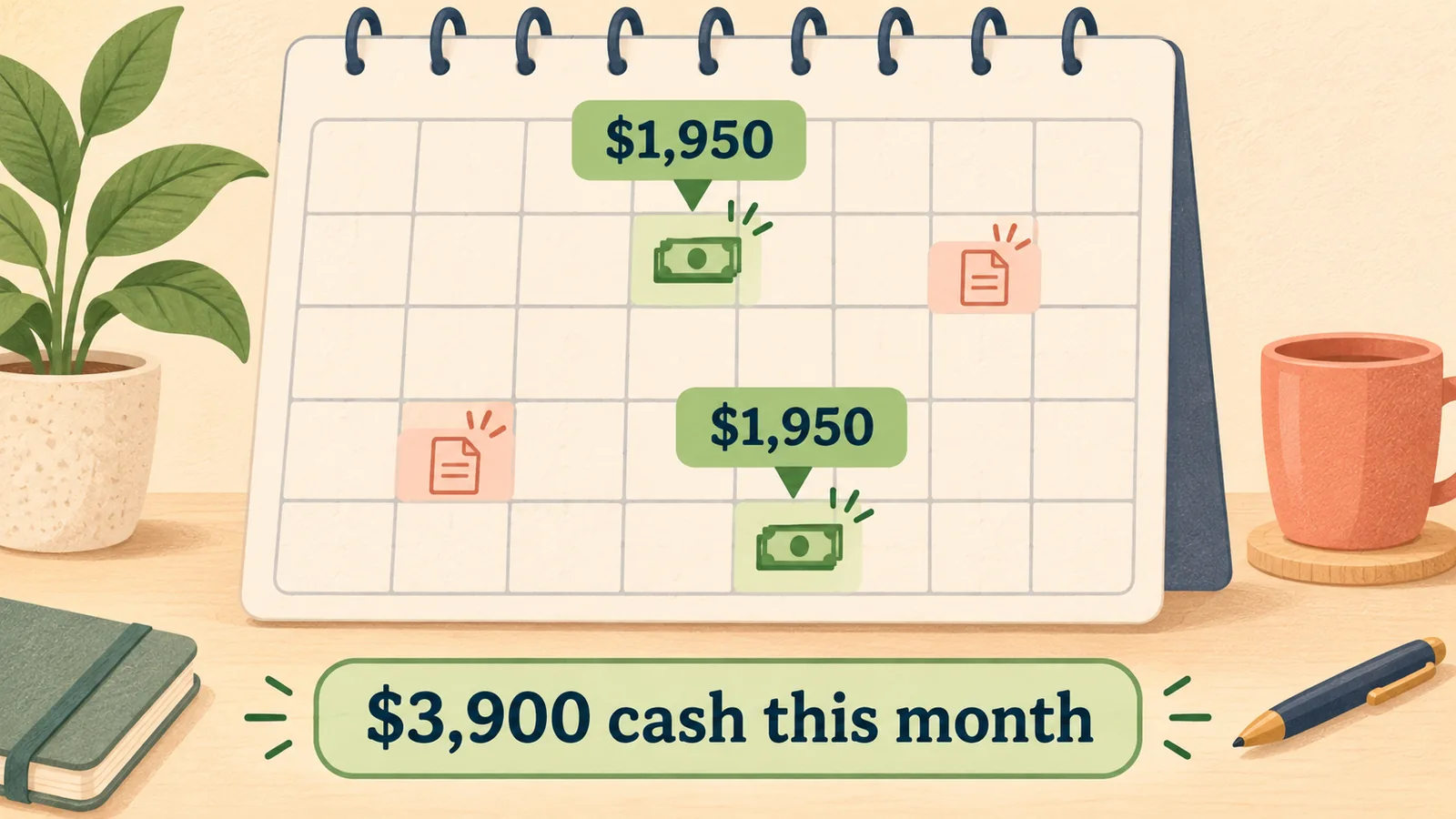
In a workbook, label the income line “net pay” or “take-home” and put the date beside it. You can then check whether a bill due before the next payday is covered.
Why Trust This Article
Cosmo Suite makes Ultimate Budget Planner. Learn about the publisher on the About page and how content is reviewed in the editorial policy. This guide uses CFPB educational material, IRS withholding information and ADP's payroll explanation for the definitions. The paycheck example is fictional and its deductions are illustrative arithmetic, not a tax estimate. The article covers employee pay and household budgeting mechanics. It is not tax or financial advice.
Where the Ultimate Budget Planner Fits
A spreadsheet can put pay dates beside bills when you prefer to record and review transactions in a file. Ultimate Budget Planner includes Excel and Google Sheets versions, monthly budget tabs, a transaction list and a Paycheck Dashboard with weekly, biweekly, semi-monthly and custom pay cycles. You enter transactions yourself. A budgeting app may suit you better if you want bank syncing and phone-first entry.
If you prefer a file you can update yourself, Ultimate Budget Planner's paycheck budgeting workbook includes a view for planning around different pay cycles. You can see how its transaction list connects to monthly and paycheck views. Use your actual net deposits as the income figures in a cash plan.
The practical check is short: note the amount, pay period and date. Then compare upcoming bills with cash that will arrive before they are due. Your gross pay still explains where the paycheck starts; your take-home amount shows what this month's cash budget can use.
Frequently asked questions
Should I use gross or net income to make a household budget?
Use the take-home amount that reaches your account for a cash budget. It is the money available for bills and spending. Keep gross pay nearby when you want to understand the deductions shown on your pay stub.
What is the difference between gross pay and net pay?
Gross pay is earnings before payroll deductions. Net pay is what remains after the taxes and other deductions listed on the pay stub. Net pay is commonly called take-home pay.
Does net income mean the amount deposited into my account?
For an employee, net pay is generally the paycheck amount after payroll deductions. It may be deposited into a bank account or sent through another payment method. Check the pay stub and payment record for the amount.
Why is my taxable income different from my gross pay?
A pay stub may show different wage amounts for different tax calculations. Some deductions affect the wages used for a particular calculation. Ask payroll to explain a line you do not recognize, and use IRS resources for federal withholding questions.
Should payroll deductions be listed as expenses if I budget from take-home pay?
Do not subtract the same payroll deduction again from a budget that starts with take-home pay. You can track a deduction separately for reference, but it has already reduced the paycheck amount you budgeted.
What does $3,000 net mean?
$3,000 net means about $3,000 remains after the deductions included in that net figure. For an employee, it usually refers to take-home pay for a stated pay period, so check whether the amount is weekly, biweekly, twice monthly or monthly.
Sources
- Consumer Financial Protection Bureau: Calculating the numbers in your paycheck
- Consumer Financial Protection Bureau: Financial Terms Glossary
- Internal Revenue Service: Tax withholding
- Internal Revenue Service: Publication 15-T (2026), Federal Income Tax Withholding Methods
- ADP: Gross pay vs. net pay: What’s the difference?
- Ultimate Budget Planner product contents
Keep reading

Bills and Paychecks
How Much Should I Spend on Rent? Start With Your Paychecks
How much should your rent be? Compare gross pay with take-home budgeting, then check bills, due dates, and move-in costs before you settle on a lease.
· 9 min read
Bills and Paychecks
How to Budget by Paycheck (and Still Track the Month)
Budget by paycheck: map each bill to the check that arrives before it is due, budget the $3,900 two-paycheck month, and keep the monthly total in view.
· 11 min read
Bills and Paychecks
Monthly Bill Tracker: Six Columns and Seven Frequencies
Monthly bill tracker: copy a free six-column layout, enter each bill once with its frequency, and see what is due before the next paycheck.
· 11 min read
